How to Remove Adhesive Residue from Walls Without Damaging the Paint
You pulled off the poster, the Command strip, or the double-sided tape, and now there’s a sticky ghost on your wall.
Before you panic about losing your deposit, try this. Most adhesive residue comes off without tools, without chemicals, and without damaging paint.
> 💡 **Key idea:** Heat + oil breaks adhesive bonds. You can remove most sticky residue from painted walls in under 5 minutes using things already in your kitchen.
## Quick summary (for busy people)
– ✔️ Start with a hair dryer on low: heat softens adhesive in 30 seconds
– ✔️ A small amount of cooking oil or peanut butter lifts the sticky residue
– ✔️ Finish with dish soap and water to remove the oil completely
– ✔️ Test in an inconspicuous spot first: paint types vary
## Why adhesive residue feels permanent
The adhesive bond gets stronger over time, especially in warm rooms. What peeled cleanly after a week can feel like it’s welded on after 6 months.
But the bond is still reversible. You just need to re-soften it.
## Step-by-step removal
### 1) Apply heat with a hair dryer
– **Why it works:** Heat returns adhesive to a near-liquid state, making it pliable and easy to peel or wipe
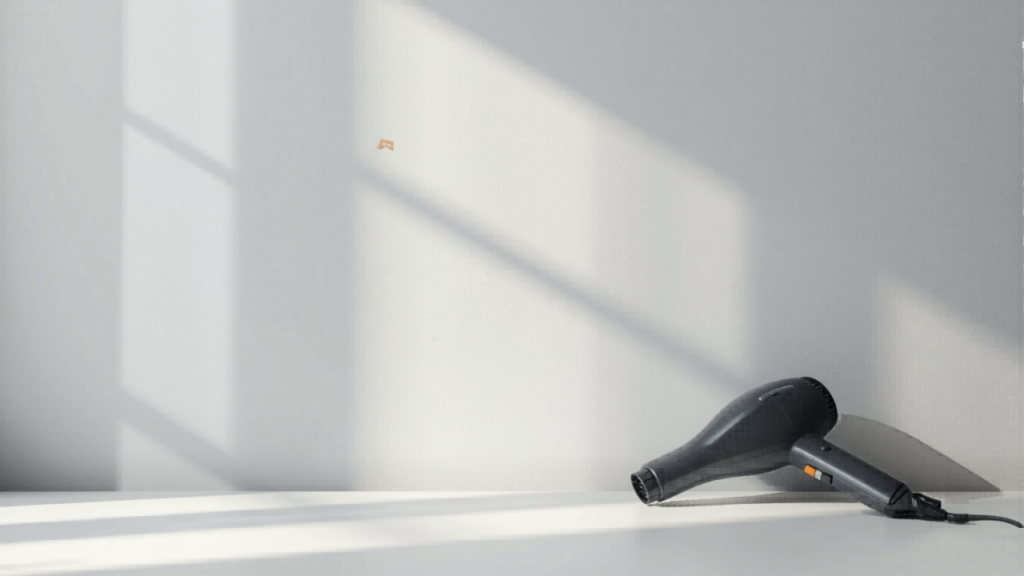
– **How to do it:** Set the hair dryer to low or medium heat. Hold it 3-4 inches from the adhesive. Move it in small circles for 20-30 seconds. The residue should feel slightly warm and tacky when ready
– **Common mistake:** Using high heat directly on the wall. It can bubble paint. Low heat for longer is always better
### 2) Peel or roll the softened residue
– **Why it works:** Warm adhesive rolls off surfaces cleanly without pulling paint
– **How to do it:** Use your fingertip or a rubber eraser to gently roll the softened adhesive into a ball. Don’t scrape, roll. Work in small sections, reheating as needed
– **Common mistake:** Using a metal scraper or knife. On painted walls, any scraping tool risks scratching the surface. Fingertips only
### 3) Apply a small amount of oil to remaining residue
– **Why it works:** Oil disrupts the adhesive chemical bond without damaging most paints
– **How to do it:** Put a tiny amount of cooking oil (vegetable, olive, coconut) or even peanut butter on a cloth. Rub it gently over the residue in small circles. Let it sit 1-2 minutes, then wipe
– **Common mistake:** Using too much oil. A small dab on a cloth is enough. Excess oil can leave its own stain, especially on flat/matte paint
### 4) Clean the oil residue with dish soap
– **Why it works:** Oil left on the wall creates a new stain, removing it immediately keeps the wall clean
– **How to do it:** Mix a drop of dish soap in warm water. Wipe the area with a damp cloth. Let it air dry
– **Common mistake:** Leaving the oil on the wall. Always follow oil treatment with soap and water
### 5) Check and repeat if needed
– **Why it works:** Thick adhesive layers may need two passes, especially for foam tape or heavy-duty mounting strips
– **How to do it:** Once the wall is dry, check visually and by touch. If residue remains, repeat the heat + oil cycle. Usually one or two passes is enough
– **Common mistake:** Rubbing harder instead of repeating the process. Pressure damages paint. Process does the work, not force
## Quick answers
### What’s the best way to remove adhesive residue from walls?
Hair dryer on low for 30 seconds, then roll the softened adhesive with a fingertip. For stubborn residue, apply a small amount of cooking oil, wait 2 minutes, wipe, then clean with dish soap and water.
### How often should you check for adhesive residue?
Check walls whenever you remove anything stuck to them: immediately after removal is the easiest time to clean. Don’t let residue sit for weeks before addressing it.
### What happens if you leave adhesive residue on a wall?
It hardens, attracts dust, and becomes much harder to remove. Landlords can charge for wall cleaning or repainting when residue has built up and stained.
## Practical checklist
– [ ] Hair dryer on low, 3-4 inches from wall, 20-30 seconds of heat
– [ ] Residue rolled off with fingertip or rubber eraser (no scraping)
– [ ] Cooking oil applied to remaining residue, waited 1-2 minutes
– [ ] Area wiped clean, then washed with dish soap and warm water
– [ ] Wall dried and inspected: second pass if needed
## Common mistakes
1. Using high heat directly on paint. Low and slow only
2. Scraping with metal tools. Roll only, never scrape
3. Skipping the soap step. Oil must be removed or it leaves a stain
## Pro tip
For Command strips specifically, always pull the tab slowly straight down (parallel to the wall) rather than peeling away from the surface. Most residue problems happen when people pull the strip off at an angle before removing the adhesive tab properly. Slow straight-down pull = clean wall.
## Conclusion
Sticky wall residue isn’t a deposit problem, it’s a 5-minute fix. Heat, oil, soap. In that order, in that sequence. Works on most painted surfaces and costs nothing to try.
- How to Patch Small Wall Holes Like a Renter Pro
- How to Fix 5 Common Apartment Problems Without Tools
- 15-Minute Apartment Fixes: 5 Renter-Safe Solutions
## FAQ
### Will cooking oil stain my wall?
On glossy or semi-gloss paint, no, as long as you wipe it off within 2-3 minutes and follow with dish soap. On flat or matte paint, be more cautious and use minimal oil. Always test in a hidden spot first.
### What about Goo Gone or other adhesive removers?
They work but they’re chemical-based and can affect certain paint finishes. The cooking oil method is safer for painted surfaces and effective for most household adhesives. Use commercial products only if oil doesn’t work.
### What if I damaged the paint removing the adhesive?
Small areas of paint damage can be touched up with matching paint: most landlords keep a can for tenant use or you can get a color match at any hardware store. Touching up a small spot is faster and cheaper than losing part of a deposit.