How to Fix Squeaky Floorboards in a Rental Without Calling a Repair Person
In this article
How to Fix Squeaky Floorboards in a Rental Without Calling a Repair Person
That floorboard that squeaks every time you walk across the apartment is one of those small annoyances that compounds over time. In a rental, you can’t replace flooring, but you can usually fix the squeak with simple methods that don’t damage anything.
This guide covers the most common squeak fixes, all of which work without permanent changes and most of which take under 30 minutes.
💡 Key idea: Most floor squeaks come from wood rubbing against wood or hardware loosening. Adding a buffer or tightening the connection eliminates 90% of squeaks.
In a hurry?
- ✔️ Identify exactly where the squeak is by walking slowly with a friend listening
- ✔️ Talcum powder or graphite powder works for many wood-on-wood squeaks
- ✔️ For loose subfloor squeaks, screws from above can fix it (with landlord permission)
- ✔️ Carpeted floor squeaks need different approach than hardwood
Diagnosing the squeak
Before fixing, locate the exact source. Squeaks travel: what sounds like one spot may be coming from elsewhere.
Two-person method
One person walks slowly across the area. The other listens at floor level. Mark squeak points with painter’s tape (removable). Identify whether the squeak comes from a specific board, a junction between boards, or beneath the surface.
Walking patterns
Note: does the squeak happen when you step on a specific spot, or when you step adjacent to it? When walking in one direction or both? These details help diagnose the cause.
Fixes by squeak type
Wood-on-wood rubbing
- Why it works: Floorboards expanding and contracting with humidity rub against neighbors. Adding lubrication powder reduces friction.
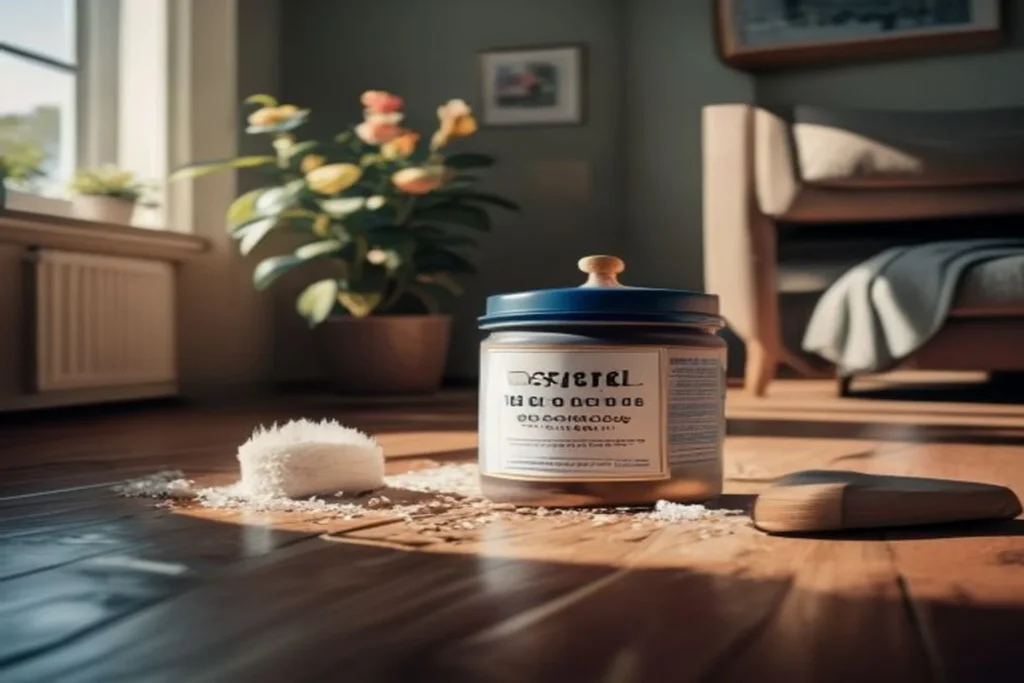
- How to do it: Sprinkle talcum powder or graphite powder on the squeak point. Work it into the seams between boards with a soft brush or cloth. Walk on the area to help it settle in. The powder fills small gaps and reduces wood-on-wood friction.
- Common mistake: Using too much powder, which then needs cleaning. A light dusting is enough.
Loose nails or fasteners
- Why it works: Nails working loose let boards move slightly when stepped on. Tightening the connection eliminates the movement.
- How to do it: If you can see slight gaps where nails should hold the board, place a heavy object on the spot and tap a finishing nail (very small) at an angle into the squeak point. This usually requires landlord approval since you’re putting nails in.
- Common mistake: Using regular nails that show. Finishing nails are nearly invisible and meant for this.
Carpet over squeaky subfloor
- Why it works: If the squeak is below the carpet, you can’t access the floor directly. But you can use special screws designed for this.
- How to do it: Carpet-friendly squeaky floor screws (sold at hardware stores) drive through the carpet into the subfloor. The screw heads have break-off points that disappear below carpet level. Best for renters who have permission for minor work; otherwise consult landlord.
- Common mistake: Trying to fix carpet squeaks from below. Often impossible in apartments.
Squeaky stairs (apartment stairs)
- Why it works: Same wood-on-wood principle as floors. Powder works on visible joints.
- How to do it: Apply talcum or graphite powder at the joints where the riser meets the tread (vertical and horizontal parts of the step). Work it in with a brush.
- Common mistake: Ignoring stair squeaks because they’re “structural.” Many are simply friction issues.
Squeaky floor questions
Can I really fix floorboard squeaks myself?
Most surface-level squeaks, yes. Deeper structural issues (subfloor problems, joist issues) need professional attention. For everyday wood-on-wood squeaks, simple methods work for most rentals.
What if my landlord won’t allow any modifications?
Stick to powder methods. Talcum and graphite powder require no permanent changes and can be vacuumed up if you move. They work for many but not all squeak types.
How long do these fixes last?
Powder fixes typically last several months before needing reapplication. Mechanical fixes (screws, nails) are permanent or until the underlying issue worsens.
Are there any sprays specifically for floor squeaks?
WD-40 and silicone sprays can work in some cases, but they can stain floors and attract dust. Powder is generally safer for hardwood. For laminate or vinyl, follow manufacturer guidance.
What if the squeak is in a hallway shared with neighbors?
Shared hallway maintenance is typically the building’s responsibility. Report it to management rather than fixing yourself.
Quick checklist
- ☐ Identify exact squeak locations with a partner
- ☐ Determine if squeak is wood-on-wood or fastener-related
- ☐ Try powder method first (no permission needed)
- ☐ For carpet squeaks, talk to landlord about screw solution
- ☐ Re-apply powder every few months as needed
Common mistakes
- Trying to fix squeaks without locating them precisely. Wasted effort.
- Using too much powder. Creates mess without better results.
- Drilling or nailing without permission in a rental. Can cost your deposit.
Worth trying
For renters who want to address floor sounds without modifications: thick rugs over high-traffic areas absorb impact noise and disguise minor squeaks. A good rug pad amplifies this effect. It’s not technically fixing the squeak, but it can reduce noticeable noise significantly.
Powder in the seam
Fixing floor squeaks in a rental is usually possible with simple methods that respect lease terms. Diagnose precisely, try the gentlest fix first, and escalate only as needed. For most squeaks, a packet of talcum powder and 15 minutes of effort solves the problem.