How to Quiet Squeaky Floors in a Rental Without Tools
In this article
That spot in the hallway that screams every time you walk on it gets old fast. Maybe it wakes the roommate. Maybe it gives away your 2 a.m. snack run. Either way, you want quiet floors, and you rent, so drilling and ripping up boards is off the table.
Good news: you can quiet squeaky floors in a rental without tools, without nails, and without risking your deposit. Most squeaks come from wood rubbing against wood or a gap between the floor and the subfloor. You can calm both with stuff you already own.
This guide walks you through quick fixes you can do tonight, in a small apartment, on a busy schedule. No hammer. No landlord call.
Key idea: Most floor squeaks come from friction or a tiny gap, and you can usually silence them with powder, a rug, or a little pressure, no tools and no damage.
Quick summary
- Squeaks happen when boards rub together or shift against the subfloor.
- Powder (talc, baby powder, or graphite) kills friction squeaks fast.
- A rug or rug pad muffles sound and adds gentle weight on loose boards.
- Find the exact spot first, then match the fix to the cause.
How to quiet squeaky floors in a rental without tools
Start by finding the squeak. Walk slowly across the area and step in different spots until you nail down the exact board. Mark it with a piece of painter’s tape so you stop guessing.
Then figure out the cause. Press down with your foot. If the board dips even slightly, you have movement against the subfloor. If two boards meet at the noisy spot and there is no dip, it is friction between the boards. Friction squeaks respond to powder. Movement squeaks respond to weight, pressure, or filling the gap. You do not need to be exact, just close enough to pick the right fix below.
The best no-tool fixes for squeaky floors
1) Work powder into the seams
Why it works: Friction squeaks come from two boards grinding together. A dry lubricant like talcum powder, baby powder, or powdered graphite slides between them and stops the rub.
How to do it: Sprinkle a generous line of powder over the noisy seam. Use a soft cloth or an old toothbrush to push it down into the cracks. Walk on the spot a few times to help it settle, then wipe up the extra. Repeat if the squeak comes back in a week.
Common mistake: Using too little. The powder has to reach down into the joint, not just sit on top. Be patient and work it in.
2) Lay a rug or rug pad over the spot
Why it works: A rug muffles the sound and a thick pad adds steady weight that keeps a loose board from popping up and down. It is the laziest fix and it works on most light squeaks.
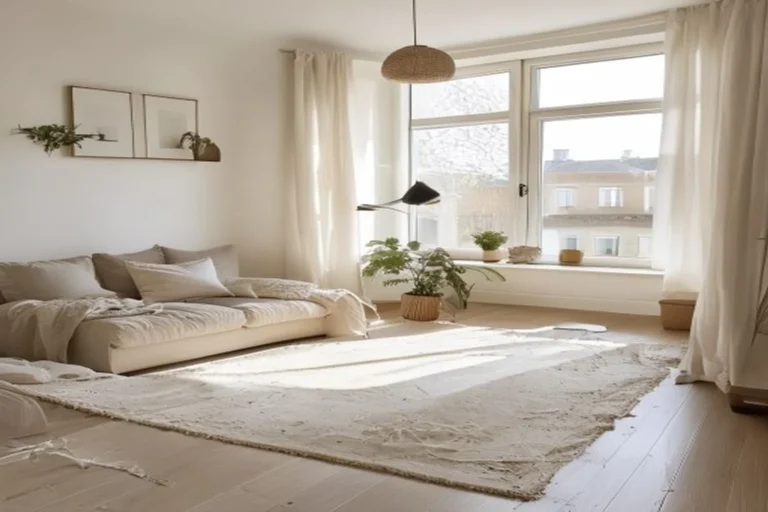
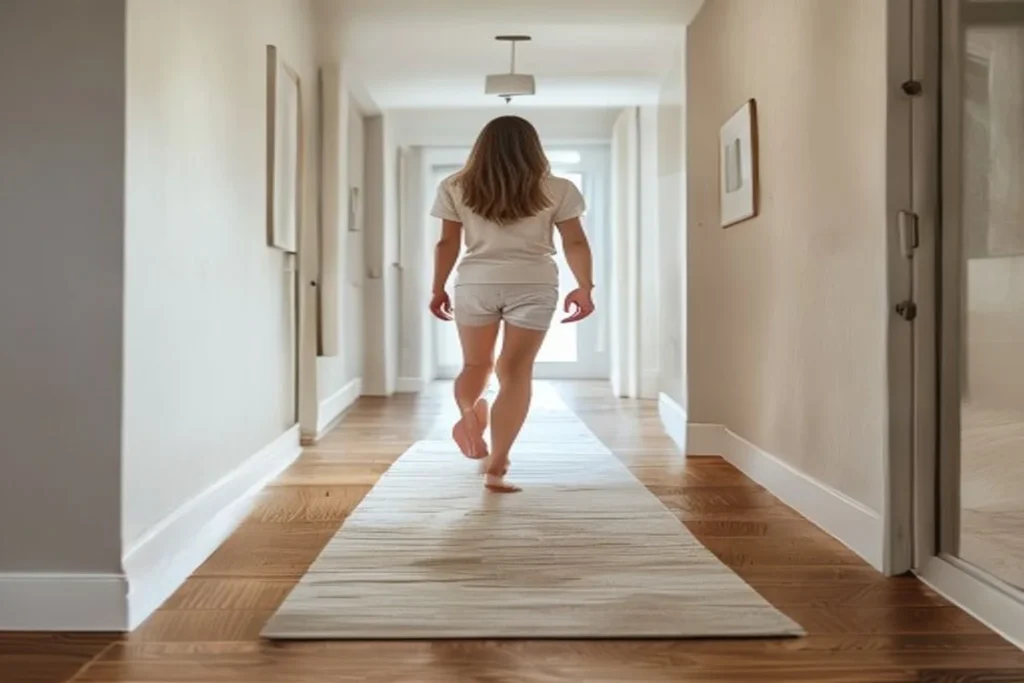
How to do it: Put a low-pile rug over the noisy area, with a dense rug pad underneath. Make sure the pad sits right on the squeaky board. For a hallway, a runner does the same job and looks intentional.
Common mistake: Using a thin rug with no pad. The pad does most of the work. Skip it and you just hide the squeak under fabric without quieting it.
3) Add weight or pressure to a moving board
Why it works: If a board flexes against the subfloor, holding it down stops the movement that makes the noise. A bit of steady weight in the right place can do what a screw would do, minus the hole.
How to do it: For a spot near a wall or corner, slide a heavy item (a full bookshelf base, a storage bench, a plant in a big pot) onto the board. For an open spot, a furniture leg parked on the squeak often does the trick. Test by stepping near it before you commit.
Common mistake: Putting weight next to the squeak instead of on it. Get the load directly over the noisy board or the flex just moves a few inches over.
4) Slip a felt pad or shim into a visible gap
Why it works: When you can see a small gap at the edge of a board, filling it removes the room the board has to move. Less movement means less noise.
How to do it: Press a thin felt furniture pad, a folded index card, or a wood shim into the gap with your fingers. Push it snug, not forced. Trim anything that sticks out with scissors so it stays hidden.
Common mistake: Jamming something thick into a tight gap. You can spread the boards and make the squeak worse, or leave a mark the landlord notices. Start thin.
Squeaky rental floor questions
Can you fix squeaky floors without removing them?
Yes. Most rental floor squeaks fix from the top with powder, a rug pad, or added weight. You almost never need to lift a board, and you should not in a rental.
What powder stops floor squeaks best?
Powdered graphite works best because it lasts longer, but talcum or baby powder is fine and easier to find. All three reduce the friction between boards that causes the squeak.
Will a rug really stop a squeak?
A rug alone muffles the sound. Pair it with a dense rug pad and it also adds weight that holds the loose board still, which is what kills most light squeaks.
Is fixing a squeaky floor going to risk my deposit?
Not with these methods. Powder wipes up, rugs and furniture leave nothing behind, and felt pads pull right out. You add zero holes and no permanent changes.
Why did my floor only start squeaking recently?
Wood moves with temperature and humidity. A new squeak often shows up in dry weather when boards shrink, or after furniture gets moved and a board loses its support.
What if the powder fix stops working after a while?
That is normal. Powder settles over time. Just sweep the area, sprinkle a fresh line into the seam, and work it back in. It takes two minutes.
Practical checklist
- Walk the area and mark the exact squeaky board with painter’s tape.
- Press the board to learn if it is friction (no dip) or movement (a dip).
- Try powder first for friction, a rug pad or weight for movement.
- Wait a week and reapply if the squeak comes back.
Mistakes to avoid
- Fixing a random board instead of finding the real one first.
- Using powder so lightly it never reaches the joint.
- Forcing a thick shim into a tight gap and spreading the boards.
Small detail, big difference
Squeaks get louder in dry winter air when wood shrinks and gaps open up. If yours flares up in cold months, a small humidifier in the room keeps the wood from drying out and shrinking, which means fewer squeaks to chase in the first place.
Powder, then a rug
You do not need a toolbox or a handyman to quiet squeaky floors in a rental. Find the board, learn whether it is friction or movement, then reach for powder, a rug pad, or a little weight. Start with the easiest fix tonight and only move up if the noise sticks around. Your next quiet midnight walk is closer than you think.