Small Living Room Setup: 5 Layout Moves That Make Any Space Feel Bigger
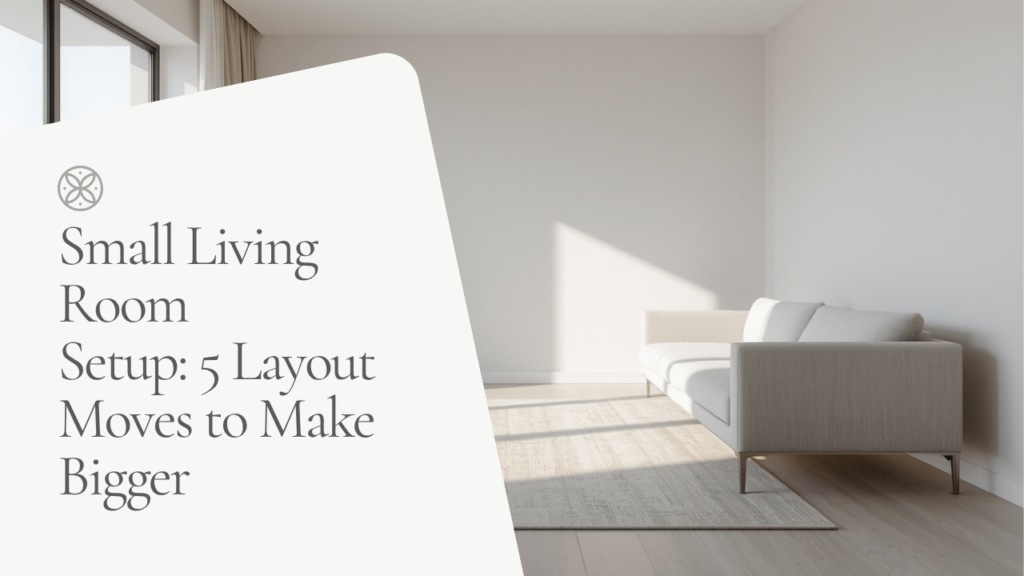
Small living room, big furniture, zero flow. That’s the setup most first-time renters end up with.
The fix isn’t getting rid of everything. It’s moving things into a layout that creates actual space, with what you already have.
> 💡 **Key idea:** Most small living rooms feel cramped because of furniture placement, not furniture size. Five layout moves can change how the whole room reads.
## Quick summary (for busy people)
– ✔️ Pull furniture away from walls: it creates breathing room, not tightness
– ✔️ One focal point (TV or window) anchors the whole layout
– ✔️ A rug defines the zone without adding clutter
– ✔️ Clear sightlines to the door and windows make the room feel twice as large
## Why small living rooms feel even smaller
Most people push furniture against walls to save space. It does the opposite.
Furniture against every wall creates a perimeter with a big empty dead zone in the middle. Nothing connects. The room feels like a waiting room.
The fix: pull things in and create a conversation zone.
## 5 layout moves that actually work
### 1) Float the sofa away from the wall
– **Why it works:** Even 6 inches of space behind a sofa creates visual depth and makes the room look larger
– **How to do it:** Pull the sofa at least a foot from the wall. If you have a console table behind it, great, it fills the gap with storage. If not, just the gap itself reads as intentional design
– **Common mistake:** Going back against the wall because it “feels weird.” Give it a week: your eye adjusts fast
### 2) Anchor the seating with a rug
– **Why it works:** A rug defines the living zone and prevents furniture from floating randomly around the room
– **How to do it:** Put the rug under at least the front legs of all seating. In a very small space, even a 5×7 rug works if it catches all front legs. The rug doesn’t need to be under everything, just connected
– **Common mistake:** Rug too small. A rug that only goes under the coffee table makes the room feel chopped up instead of unified
### 3) Set one clear focal point
– **Why it works:** Your eye needs something to land on. Without a focal point, the room reads as chaotic even when it’s clean
– **How to do it:** If you have a TV, orient every seat toward it. If you don’t, use the window as the focal point or a simple gallery wall. Don’t compete for attention with two walls of stuff
– **Common mistake:** Putting the TV in the corner at an angle. It forces awkward seating and wastes corners that could hold shelves or plants
### 4) Clear the path to the door
– **Why it works:** A visible, unobstructed path from the entrance to the main seating signals openness, even if the rest of the room is full
– **How to do it:** Walk from your front door to your sofa. Is there anything in the way? Move it. The path should be at least 30 inches wide
– **Common mistake:** Blocking the sightline with a side table or plant stand right at the room entrance
### 5) Go vertical with storage
– **Why it works:** Floor space is limited. Wall space isn’t. Moving storage up frees the floor and draws the eye upward, making ceilings feel higher
– **How to do it:** A tall bookshelf, floating shelves above the sofa, or wall-mounted media storage all move clutter off the floor without taking up square footage
– **Common mistake:** Shelves at furniture height. Anything at eye level competes with the furniture visually. Go above it
## Quick answers
### What’s the best layout for a small living room?
Float your sofa away from the wall, anchor everything with a rug, orient seating toward one focal point, and keep the path to the door clear. These four moves work in almost any layout.
### How often should you rearrange a small living room?
Whenever it starts feeling off. Most renters find one layout that works and keep it for months. Try the float-and-anchor setup first and give it two weeks before deciding.
### What happens if you keep furniture against every wall?
The room feels like a waiting room: furniture on the edges, dead zone in the middle, no flow. Pulling everything in creates connection and makes the space feel intentional.
## Practical checklist
– [ ] Sofa pulled at least 6 inches from the wall
– [ ] Rug under front legs of all seating
– [ ] One clear focal point (TV, window, or accent wall)
– [ ] Path to door is at least 30 inches wide
– [ ] Vertical storage used instead of floor-level shelving
## Common mistakes
1. Rug is too small. Go bigger: it anchors, a small rug just fragments
2. Two competing focal points. Pick one wall and build around it
3. Storage at floor level only. Use walls and height whenever possible
## Pro tip
Before moving anything heavy, map the room with painter’s tape on the floor. Mark where the sofa, coffee table, and chairs would go in the new layout. Walk the space for a day. If it feels right, move the furniture then.
## Conclusion
Five moves. No new furniture. A small living room that reads as intentional instead of cramped. Start with floating the sofa: it’s the single change with the biggest payoff and takes less than 10 minutes.
Nearby topics
- Studio Apartment Zoning: How to Make One Room Feel Like Three Without Walls
- Small Bedroom Setup: 6 Layout Moves That Create Space
- First Apartment Setup: A 7-Day Plan to Get Organized
## FAQ
### Should a sofa face the TV or the window?
In most apartments, face the TV: it’s the primary activity zone. If you don’t have a TV, face the window. Natural light is a better focal point than a blank wall.
### What size rug works for a small living room?
5×7 is the minimum for a defined zone. 8×10 works well in most apartments under 500 sq ft. The rug should catch the front legs of every piece of seating: that’s the rule.
### Can I have a coffee table in a tiny living room?
Yes, but go smaller than you think you need. A 24×36 inch table leaves enough walking room and still does the job. Or use a set of small round side tables instead of one large coffee table.