The Shelf Limit Rule: How to Stop Owning More Than Your Apartment Can Hold
Your apartment keeps filling up, not because you shop a lot, but because you never set a limit on how much any single zone can hold.
The shelf limit rule fixes that. One rule per shelf, applied once.
> 💡 **Key idea:** Every shelf, drawer, and storage zone has a physical limit. When you hit it, something leaves before anything new enters. This prevents slow accumulation without requiring periodic declutters.
## Quick summary (for busy people)
– ✔️ Set the limit when the zone is at its ideal state, not when it’s empty or full
– ✔️ The limit applies to categories: books, kitchen tools, bathroom products, decor
– ✔️ When the zone is full and something new arrives, something leaves, same day
– ✔️ No exceptions, no “just this once”: the rule works because it’s absolute
## Why apartments slowly fill up even when you’re careful
Most people don’t make a decision when something enters the apartment. The decision happens later, usually never.
The shelf limit rule forces the decision at the point of arrival, when intention is highest.
## How to set your shelf limits
### 1) Audit each zone at its ideal state
– **Why it works:** You can’t set a meaningful limit on a zone that’s chaotic. Reset it first, then count
– **How to do it:** For each shelf, drawer, or zone, get it to the state where it feels “right.” Not empty, not stuffed. Write down how many items are in it. That’s your limit
– **Common mistake:** Setting the limit when the zone is empty. An empty limit is meaningless. You’ll fill it and then some before you ever hit it
### 2) Apply the limit to categories, not shelves
– **Why it works:** Items drift between zones. A category limit travels with the category regardless of where it lives
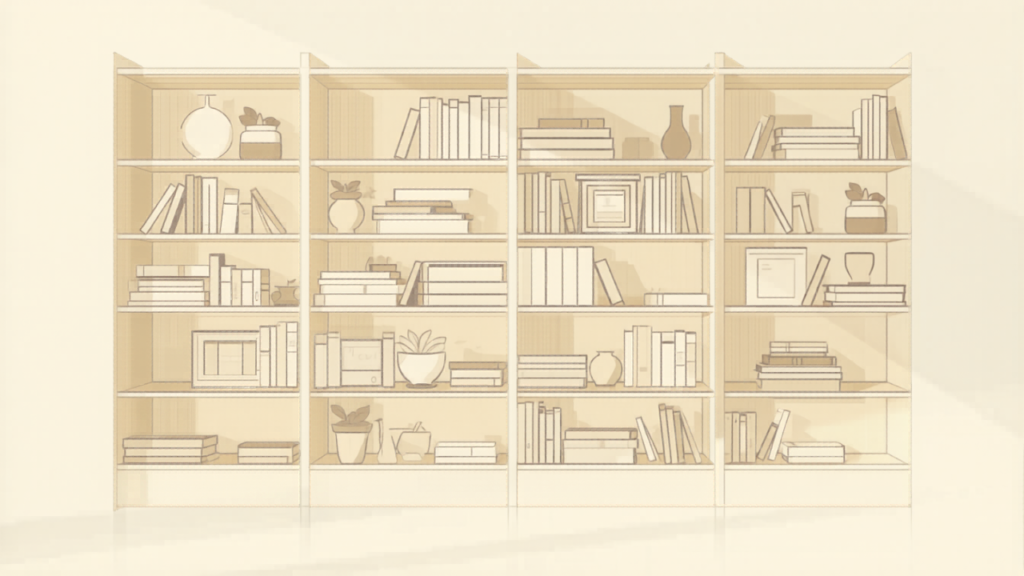
– **How to do it:** “I own 20 books” is a category limit. When you buy book #21, book #1 goes. Not “the shelf is full, I’ll find another shelf”, the category limit is the hard stop
– **Common mistake:** Letting category overflow fill adjacent zones. A full bookshelf that overflows to the desk is still over the limit
### 3) Write the limits down once
– **Why it works:** Memory is unreliable. A written list is a rule, a remembered rule is a suggestion
– **How to do it:** Keep a note (phone, sticky on the inside of a cabinet) that lists each category and its limit. Check it when something new arrives
– **Common mistake:** Trusting memory. “I think I had about 15” always becomes 20 by next month
### 4) Enforce it at the point of purchase, not after
– **Why it works:** Decisions are easier before the item is home. Once it’s in your space, sunk cost makes it harder to remove
– **How to do it:** Before buying something new, check the limit. Is there room? If not, decide what leaves before you buy, not after
– **Common mistake:** Buying first, deciding later. “I’ll figure out what to remove when I get home” means it never happens
## Quick answers
### What’s the best way to stop a small apartment from getting fuller over time?
Set a limit for each zone and category. When the zone hits its limit, something leaves before anything new arrives. The limit is set at the ideal state, not empty, not stuffed.
### How often should you review your limits?
Once every 6 months. Limits evolve: your book collection might grow because you read more, or shrink because you switched to digital. Review and reset as life changes.
### What happens if you don’t set limits?
The apartment fills at the pace of acquisition. Clutter isn’t created in bursts, it’s the result of thousands of small decisions where nothing left. Limits are the only system that stops this automatically.
## Practical checklist
– [ ] Each major zone audited at its ideal state
– [ ] Limit recorded for each category (books, tools, clothes, decor, etc.)
– [ ] Limits written down and accessible
– [ ] Rule established: something out before something in when at limit
– [ ] Limits reviewed and adjusted every 6 months
## Common mistakes
1. Setting limits when zones are empty. Set at ideal state: the number that feels right
2. Letting category overflow fill adjacent zones. The limit travels with the category
3. Deciding what to remove after the new item is home. Decide before you buy
## Pro tip
For clothes specifically, use the physical limit of your closet rod, whatever fits without cramming. When the rod is at that density and you buy something new, something goes before the new item gets a hanger. The rod is the limit.
## Conclusion
One audit. Written limits. One rule: when the zone is full, something leaves before anything enters. That’s the shelf limit system. Simple, absolute, permanent. No weekly declutter sessions, no periodic purges, just a limit that holds.
You might also like
## FAQ
### What if my category limit feels too low?
Ask yourself: do I use everything that’s currently in the zone? If not, the limit should be lower, not higher. The goal is a zone where everything is used, not a zone that holds as much as physically possible.
### Does the shelf limit apply to consumables?
No: food, toiletries, cleaning supplies replenish by nature. Apply limits to objects that accumulate: clothes, books, kitchen tools, decor, electronics, hobby supplies.
### What about items with sentimental value?
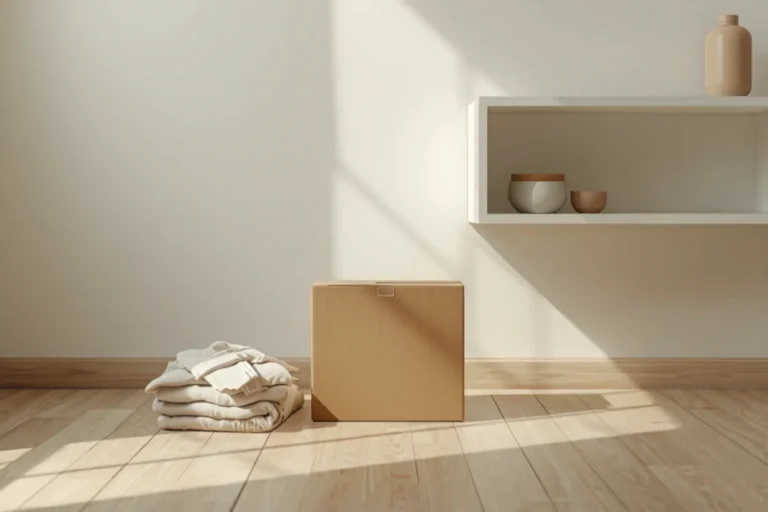
Apply the same limit. Sentimental items are not exempt: they just need their own category with its own limit. “I keep one box of sentimental items” is a valid and complete limit.