The Empty Surface Rule: How to Keep Counters Clear Without Constant Cleaning
In this article
The Empty Surface Rule: How to Keep Counters Clear Without Constant Cleaning
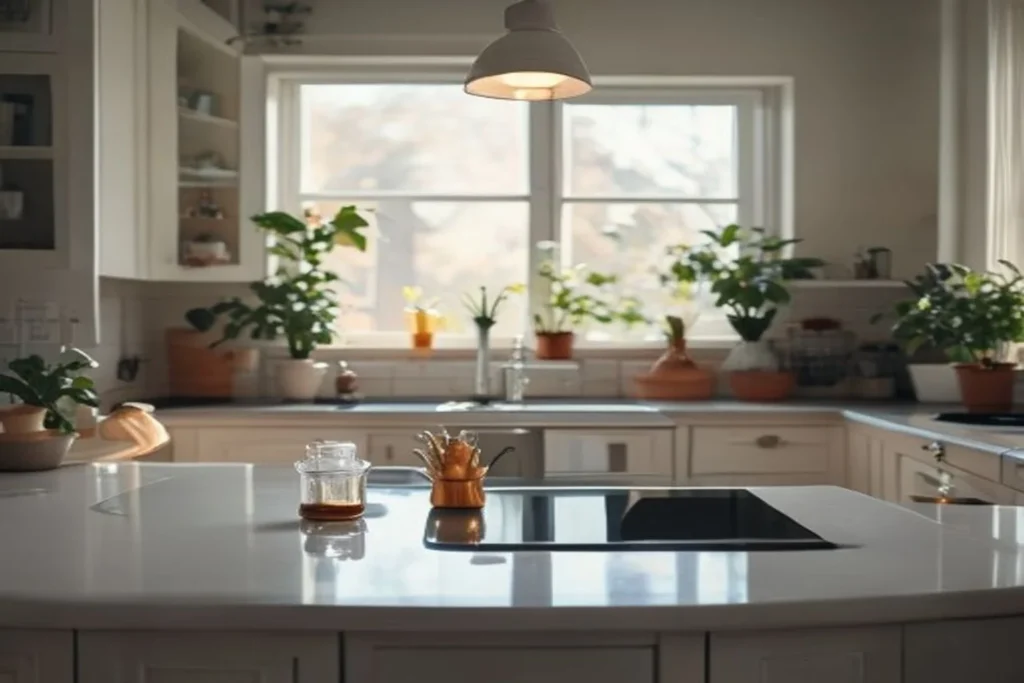
Cluttered counters are the visual sign that the whole apartment is on the edge of chaos. Even when other rooms look fine, full counters make everything feel messy. The good news: keeping counters clear isn’t about cleaning more, it’s about a single rule that changes how things land on them.
The Empty Surface Rule is simple: if it doesn’t belong on the counter, it doesn’t stay on the counter.
💡 Key idea: Counters are workspace, not storage. Every item that lives there permanently is a forfeit of useful surface area.
In a hurry?
- ✔️ Decide what actually belongs on each counter, then commit
- ✔️ Anything else gets a permanent home elsewhere
- ✔️ A daily 60-second sweep maintains the rule
- ✔️ Re-evaluate every 3 months as items naturally accumulate
Why counters fill up
Counters fill up because they’re convenient. The mail comes in, you put it on the counter. Keys, phone, sunglasses: all on the counter. Items that should be put away get the counter as their default landing spot. Over time, every counter has 6-12 things permanently living on it, with another 4-6 in transit.
The solution isn’t more storage. It’s redefining what counters are for.
How the Empty Surface Rule works
1) Define what belongs on each counter
- Why it works: Without a clear definition, anything can land on a counter “temporarily” and stay forever.
- How to do it: For each counter (kitchen, bathroom, entryway, etc.), list 3-5 items that genuinely belong there. Kitchen counter near the stove: maybe just oil, salt, and pepper. Bathroom counter: soap dispenser. Everything else has a permanent home elsewhere.
- Common mistake: Defining counters as “for whatever I happen to need.” That’s how they got cluttered in the first place.
2) Create permanent homes for everything else
- Why it works: Items end up on counters because they don’t have proper homes. If keys have a fixed spot, they go to that spot, not the counter.
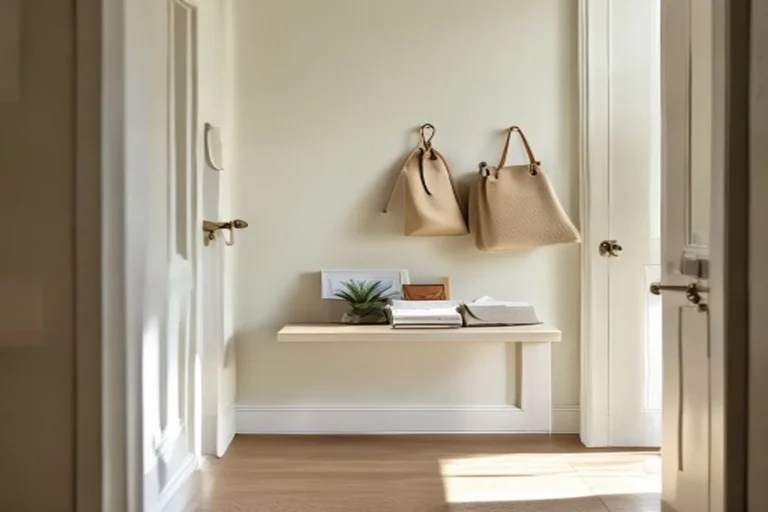
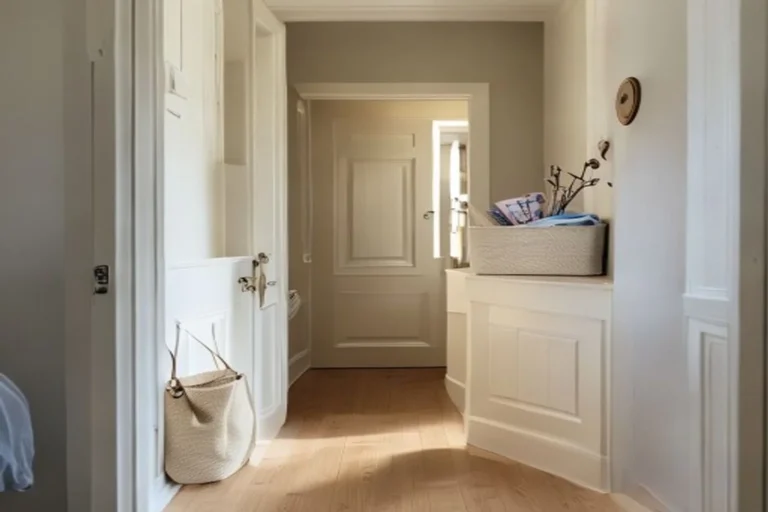
- How to do it: Mail, keys, phone, sunglasses, bags, miscellaneous items: each needs a designated location. Hooks, baskets, drawers, or shelves. The location matters less than the consistency.
- Common mistake: Vague locations (“somewhere in the entryway”). Specific spots work; vague areas don’t.
3) Daily 60-second sweep
- Why it works: Items will still land on counters during the day. A daily clearing prevents accumulation.
- How to do it: Before going to bed (or in the morning), walk through and put every counter item back to its proper home. 60 seconds total. The trick is doing it every day, not letting things build for a week.
- Common mistake: Saving the sweep for “when I have time.” It never happens. Daily ritual is the key.
Empty surface questions
What about appliances? Do they count as clutter?
Appliances you use daily (coffee maker, toaster) reasonably stay out. Appliances you use weekly or less should be stored away. The line is daily use, not “but I might use it this week.”
How do I keep guests from cluttering my counters?
You can’t, fully. Guests will put things on counters. The solution is a quick post-visit sweep to reset. The rule applies to your own behavior; guests are temporary disruptions.
What if I have a small kitchen with no other storage?
The Empty Surface Rule becomes more critical, not less. With less storage, every counter item competes for limited space. Be strict about what belongs out. Maybe just one appliance, oil, and salt, not three appliances, six spice jars, and a fruit bowl.
Does this work for shared apartments?
It needs household agreement to work. Have a conversation: agree on what stays out, agree on roles for daily reset. Without buy-in from all residents, one person trying to maintain empty surfaces fights a constant losing battle.
What about decorative items like vases or candles?
Decoration is fine if intentional and minimal. One decorative piece per counter is the limit before it starts feeling cluttered. The Empty Surface Rule isn’t about being austere, it’s about deliberateness.
Before you start
- ☐ List the 3-5 items that genuinely belong on each counter
- ☐ Identify where every other current counter item should live
- ☐ Set up permanent homes (hooks, baskets, drawers)
- ☐ Establish daily 60-second sweep routine
- ☐ Re-evaluate every 3 months
What not to do
- Trying to organize without first defining what belongs out. Without limits, clutter returns.
- Skipping the daily sweep. Items accumulate quickly without it.
- Adding “just one thing” to the approved list every week. The list grows back to chaos.
Worth trying
For mail specifically, designate a single tray or shelf where mail lives. Open it within 24 hours, sort into “act now,” “file,” “trash.” Never leave unopened mail on the counter: that’s the start of permanent buildup.
Clear counters, on purpose
The Empty Surface Rule is one of those simple ideas with outsized impact. Counters that stay clear don’t require constant deep cleaning; they require defining limits and maintaining them daily. Empty surfaces also make any apartment feel larger and more put-together. Try it for one week: the difference is immediate.