How to Set Up a Small Apartment: 8 Moves That Actually Work
In this article
You’ve been staring at that awkward corner for months. Too small for furniture, too big to ignore. The closet has no system so you open it and close it fast. The bedroom fits a bed and… that’s about it.
Small apartments do not need more storage. They need smarter placement. These eight setup moves work with the square footage you already have.
💡 Key idea: Small spaces feel crowded because things are in the wrong spots, not because there are too many things.
In a hurry?
- ✔️ Vertical space is almost always wasted in small apartments
- ✔️ Dual-purpose furniture replaces two items with one
- ✔️ Negative space is a feature, not a failure
- ✔️ Zone your apartment by activity, not by room name
Why small apartment setups feel cluttered
Most small apartments fail for one reason: every wall has something against it and every surface holds something on it. The eye has nowhere to rest. Everything competes for attention.
The fix is not to store more. It is to move things up, consolidate function, and leave deliberate empty patches. Empty space in a small apartment is a design choice, not a mistake.
8 small-space setup moves that actually work
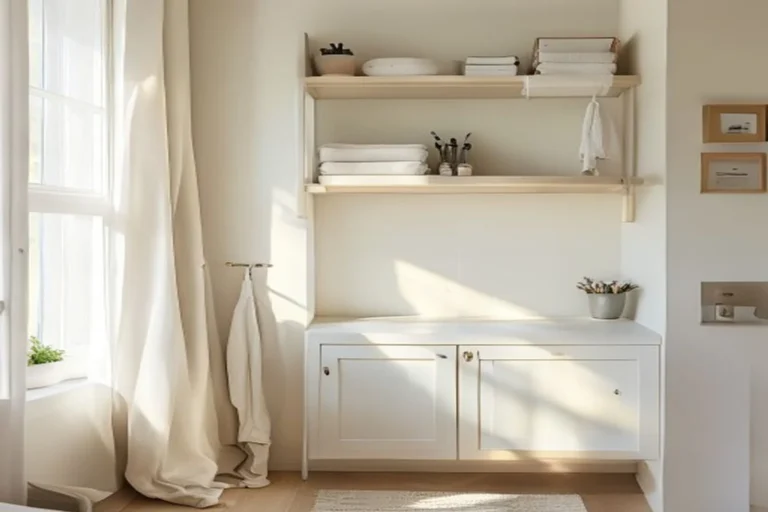
1) Go vertical with shelving
- Why it works: Vertical wall space is almost always unused in rental apartments. Floor-to-ceiling shelves hold twice what a wide bookcase does in half the footprint.
- How to do it: Install floating shelves from 5 feet up to ceiling height. Use the high shelves for things you grab monthly, not daily. Keep daily items at eye level.
- Common mistake: Packing every shelf full. Leave 20% of shelf space empty. Full shelves read as clutter even when organized.
2) Replace single-function furniture
- Why it works: A storage ottoman replaces a coffee table and a storage bin. A bed with drawers replaces a dresser. Every item doing two jobs means fewer items total.
- How to do it: Walk through your apartment and name each furniture piece’s single function. If it only does one thing, it is a candidate to swap with a dual-purpose version.
- Common mistake: Buying a fold-out sofa bed for guests you host twice a year. Optimize for your actual daily life, not hypothetical scenarios.
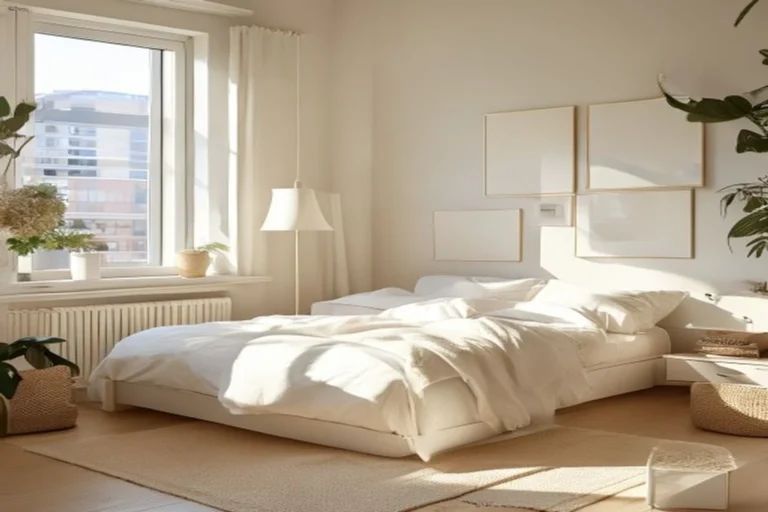
3) Use the space under the bed fully
- Why it works: The average queen bed has 20 cubic feet of storage underneath. Most renters use zero of it.
- How to do it: Low-profile flat bins on wheels work best. Categories work better than random storage. Seasonal clothes, extra linens, rarely-used items. One bin per category, labeled.
- Common mistake: Throwing items under the bed loose. You can never find anything, so you stop using the space within a week.
4) Zone by activity, not by room name
- Why it works: Labeling your only room “living room” means you fight the space when you need to work, eat, or exercise. Defining zones by activity unlocks how the space actually works.
- How to do it: Map three or four activity zones. Work zone, sleep zone, relax zone. Use a rug, lighting, or a bookshelf as a visual boundary instead of walls.
- Common mistake: Mixing zones. Your work desk in the sleep zone wires your brain to stay alert in bed.
5) Put your most-used items at 24-to-48-inch height
- Why it works: Ergonomics. Reaching down or up more than two feet for daily items wastes time and creates resistance to putting things back.
- How to do it: Audit every item you touch daily. Move each one to a spot between knee height and shoulder height. Push rarely-used items above or below that band.
- Common mistake: Keeping pretty items in the prime zone and practical items in awkward spots. Prioritize use, not aesthetics.
6) Leave one wall or corner completely clear
- Why it works: A single empty patch makes the whole apartment feel larger. Your eye lands there and breathes. Without it, every glance is processing clutter.
- How to do it: Pick one corner of your main room. Remove everything. Resist filling it. That negative space is doing more work than a shelf of knickknacks ever could.
- Common mistake: Filling the empty space within two weeks because it “feels wasteful.” The empty space is intentional. It is not wasted.
7) Maximize door and wall hooks
- Why it works: The backs of doors are dead space in most apartments. One over-door organizer can hold 20 items that currently live on your counter or floor.
- How to do it: Put hooks on the back of every door. Bathroom door: towels and robes. Bedroom door: tomorrow’s outfit, bags, belts. Closet door: shoes, accessories.
- Common mistake: Using door hooks for random overflow. Each hook should have a single assigned item so the system stays sorted.
8) Control the entryway first
- Why it works: The entryway sets the tone for every room. A messy entryway primes you to see the whole apartment as messy, even when the rest is fine.
- How to do it: Keep only four things at the entry: shoes (max two pairs out), keys, bag, and one hook per person in the apartment. Nothing else lives there.
- Common mistake: Using the entryway as staging for outgoing items. They never leave. Give outgoing items a dedicated spot in the kitchen instead.
Small apartment setup questions
What is the best small apartment setup tip for renters?
Go vertical first. Most small apartments use only the bottom half of their wall space. Floating shelves from 5 feet to ceiling nearly double your storage without touching floor space.
How often should you reorganize a small apartment?
Do a full reset quarterly. Small adjustments work better than constant reorganizing. Quarterly lets you respond to seasonal changes without burning out on constant tweaking.
What happens if you don’t zone a small apartment?
Every activity bleeds into every other one. Work stress follows you to bed. Relaxation guilt follows you to the desk. Zones create mental separation where walls cannot.
What furniture works best in a small apartment bedroom?
A bed with under-drawer storage and a floating nightstand. That combination eliminates the need for a dresser and a separate nightstand, freeing significant floor space.
How do I make a small apartment look bigger without renovating?
Mirrors on one wall, lighter curtains that hang from ceiling height, and one empty corner. These three moves cost under a hundred dollars and visually expand a room by 30%.
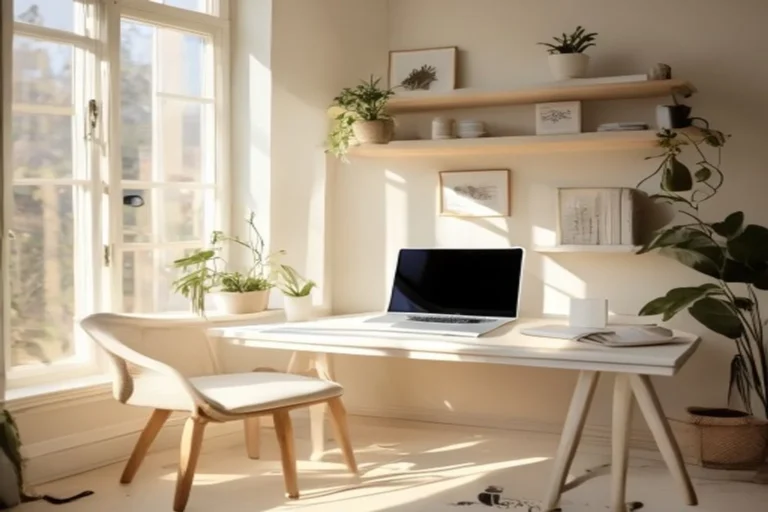
Can I have a home office in a small apartment?
Yes. A floating desk on one wall, a chair that tucks under, and a small lamp. Define it with a rug or a plant as the zone boundary. You can build a functional work zone in under 4 square feet.
How much storage does a small apartment actually need?
Less than you think. Most storage problems are item quantity problems. The average renter owns 40% more than their apartment needs to hold. One declutter pass reduces the storage requirement more than any furniture purchase.
Practical checklist
- [ ] Floating shelves above the 5-foot line in at least one room
- [ ] Under-bed storage with labeled flat bins
- [ ] One piece of single-function furniture replaced or targeted
- [ ] One empty corner or wall patch designated and cleared
Common mistakes
- Buying storage before removing anything. Storage does not solve clutter. Removing items does.
- Matching furniture sets. In small spaces, visual variety breaks the room up. One heavy matching set makes everything feel smaller.
- Ignoring lighting. A lamp in a dark corner makes it feel like a separate zone. It costs less than any furniture.
Worth trying
Borrow a wide-angle lens or use your phone’s panorama mode to photograph your main room. Panorama shots reveal layout issues and dead zones your eyes skip in person. Problems that felt vague become obvious in the photo.
Eight moves, in order
A small apartment is not a problem to solve. It is a constraint to work with. Vertical space, dual-function furniture, activity zones, and a single empty patch. Eight moves that cost almost nothing and change how the whole apartment feels.
Pick one of the eight moves to implement this weekend. One move changes the whole mood of a small room.