How to Stop Cabinet Doors From Banging Shut
In this article
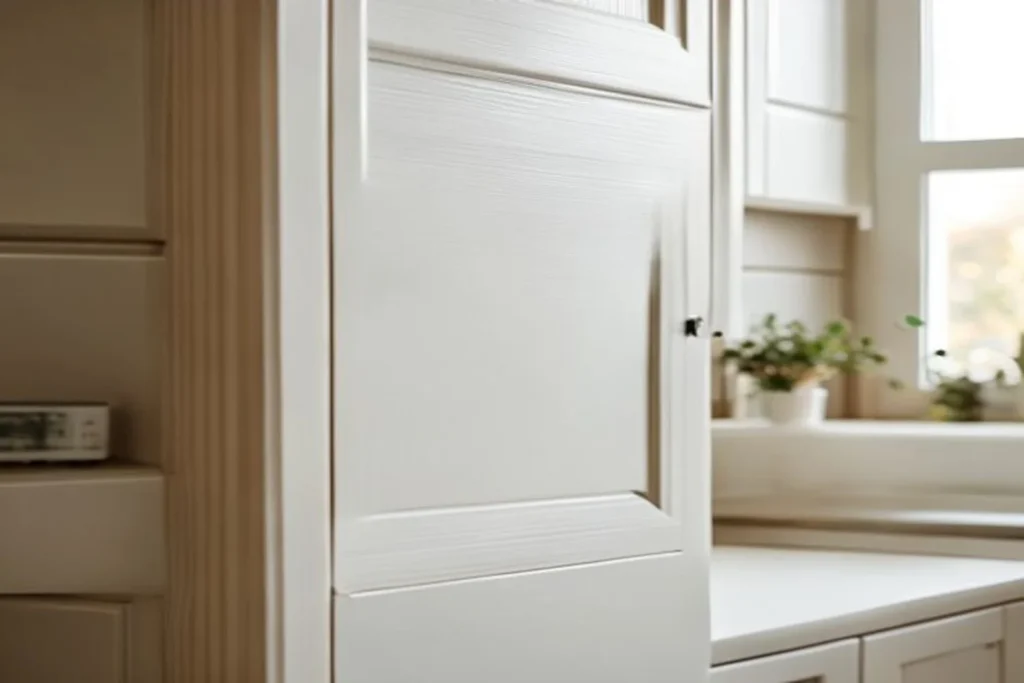
You close a cabinet door and the whole kitchen hears it. Bang. Again at 6am when you grab a mug, and again late at night when someone raids the snack shelf. In a small apartment, that sound carries straight to the bedroom and through the wall to your neighbor. If you want to stop cabinet doors from banging shut, you do not need a toolbox or a landlord’s permission. You need a couple of cheap fixes and about ten minutes.
This is one of those tiny annoyances that quietly wears you down. The good news: it is also one of the easiest things to fix in a rental. Everything here is renter-safe, reversible, and works on standard cabinet doors.
Key idea: A few felt or rubber bumpers placed where the door meets the frame absorb the slam, and they cost almost nothing to add or remove.
If you only read one part
- Stick-on rubber or felt bumpers are the fastest fix, and they leave no marks when you peel them off.
- Place two bumpers per door: one near the top corner, one near the bottom, on the inside edge that hits the frame.
- For drawers and louder doors, foam tape or a soft-close adapter quiets the impact even more.
- None of this damages the cabinet, so you keep your deposit and the noise stops the same day.
Why cabinet doors bang shut in the first place
The bang happens because the door slams hard against the bare frame with nothing to soften the hit. Most rental cabinets use a simple magnet or spring catch that yanks the door closed in the last inch. There is no cushion between wood and wood, so you get a sharp knock every time.
Old cabinets make it worse. Loose hinges let the door swing with extra speed. Warped doors hit unevenly, so one corner cracks against the frame before the rest. Once you know where the door actually touches the frame, you know exactly where to add a cushion. That is the whole trick.
The best ways to stop cabinet doors from banging
1) Stick-on bumper pads
Why it works: These small clear or felt dots sit between the door and the frame and absorb the impact. The door still closes fully, but it lands soft instead of hard. They are the cheapest and most renter-friendly option you can buy.
How to do it: Buy a pack of self-adhesive bumpers (rubber for kitchens, felt for quieter rooms). Clean the inside edge of the door with a dry cloth so the glue sticks. Press one near the top corner and one near the bottom corner, right where the door meets the frame. Close the door to check the fit.
Common mistake: Using only one bumper in the middle. The corners take the most force, so a single center dot lets the edges still knock. Always do two, top and bottom.
2) Foam weatherstrip tape
Why it works: A thin strip of foam tape covers the entire edge, not just two points. This is the move for doors that bang loud or rattle when they shut. The foam spreads the cushion across the whole contact line.
How to do it: Get a roll of thin self-adhesive foam tape from any hardware shop. Run a strip along the inside edge of the frame where the door rests. Trim it with scissors. Keep it thin so the door still closes flush and the catch still grabs.
Common mistake: Going too thick. Bulky foam stops the door from closing all the way, so the latch will not hold and the door drifts open. If yours does that, swap to a thinner roll.
3) Tighten the hinges
Why it works: A loose door swings faster and slams harder. Snugging up the hinge screws slows the swing and lines the door back up with the frame, so it sits even and quiet.
How to do it: Open the door and find the screws on the hinge plates. Turn each one clockwise with a screwdriver until snug, not forced. If a screw spins without biting, the hole is stripped: push a couple of wooden toothpicks in with a dab of glue, let it set, then drive the screw again.
Common mistake: Cranking the screws too hard and cracking the cabinet wood or stripping the hole further. Stop the moment it feels firm.
4) Add a soft-close adapter
Why it works: A soft-close hinge adapter catches the door in the last inch and eases it shut on its own. No bang, no effort. It is the closest thing to a built-in luxury cabinet without replacing anything.
How to do it: Buy clip-on soft-close adapters made for European-style hinges (the common cup hinge in most rentals). They snap onto the existing hinge arm in seconds, no drilling. Check that your hinges match before you buy.
Common mistake: Assuming every adapter fits every cabinet. Old face-frame cabinets with exposed hinges may not take a clip-on. Measure or photograph your hinge first.
Banging cabinet questions
What is the cheapest way to stop a cabinet door from banging?
Stick-on bumper pads. A pack costs a few dollars and fixes several doors. Place two per door, top and bottom, on the inside edge that hits the frame.
Will any of these damage a rental cabinet?
No. Bumpers and foam tape peel off clean. Tightening hinges just uses the existing screws. Soft-close adapters clip on without drilling, so everything is reversible.
Why does my cabinet door still bang after adding bumpers?
The bumpers are probably in the wrong spot or too thin. The door makes contact at the corners first, so put one near each corner, not in the center, and add a second layer if it still knocks.
Do soft-close adapters work on all cabinets?
They work on most rentals with European cup hinges. Older cabinets with exposed face-frame hinges may not fit, so check your hinge type before buying.
How many bumpers do I need per door?
Two. One near the top corner and one near the bottom corner of the edge that meets the frame. That covers the spots where the door hits hardest.
Can I use bumpers on drawers too?
Yes. A small bumper or a strip of foam tape on the drawer face where it meets the frame quiets the same kind of bang when you push a drawer shut.
Practical checklist
- Close each door slowly and watch where it touches the frame.
- Wipe that contact edge clean so the adhesive holds.
- Stick two bumpers per door, one near each corner.
- Test by closing every door once and listening for the bang.
Avoid these
- Using a single bumper in the center instead of two at the corners, which leaves the loud edges exposed.
- Adding foam so thick the door will not latch and keeps swinging open.
- Ignoring loose hinges, so the door keeps slamming hard no matter how many bumpers you add.
One more thing
If one specific door is the loud one, open it fully and look at the gap along the frame while it is shut. The side with the smallest gap is where it hits first. Put your thickest bumper exactly there and the noise usually drops to nothing with a single pad.
One bumper per door
Banging cabinet doors are an easy win. Start with stick-on bumpers since they cost almost nothing and take two minutes. If a door is still loud, add foam tape or tighten the hinges, and use a soft-close adapter for the worst offender. Grab a pack of bumpers, walk through your kitchen tonight, and silence the noisiest door first.