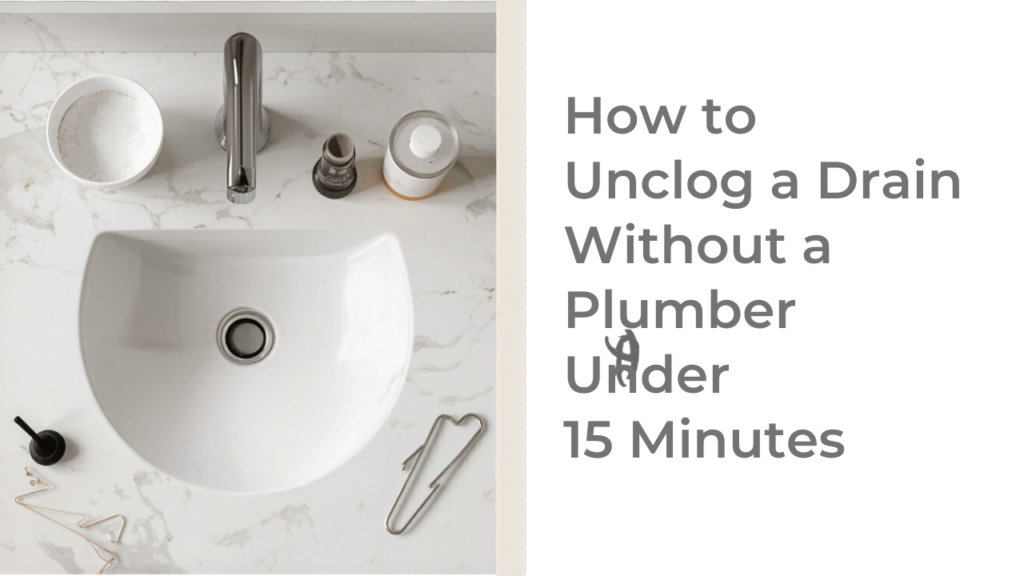
How to Unclog a Drain Without a Plumber (Under 15 Minutes)
In this article
Slow drain in the bathroom sink. Water pooling around your feet in the shower. Kitchen sink that takes forever to empty. These are the moments renters panic and reach for the phone.
Most drain clogs clear in under 15 minutes with stuff you already own. No plumber, no harsh chemicals, no expensive service call. You just need the right order of moves.
💡 Key idea: 90% of apartment drain clogs are hair, soap, or grease right at the top. You rarely need to go deeper.
The short version
- ✔️ Boiling water handles most kitchen grease clogs
- ✔️ A bent wire hanger clears bathroom hair clogs fast
- ✔️ Baking soda plus vinegar is the renter-safe overnight fix
- ✔️ Never use chemical drain openers in old apartment pipes
How to unclog a drain without a plumber
The trick is knowing which clog you have before you act. Kitchen drains clog differently from bathroom drains. Using the wrong method wastes time and can damage old rental plumbing.
Bathroom clogs are almost always hair and soap scum. Kitchen clogs are grease, food scraps, or coffee grounds. Each has a simple first move that works nine times out of ten.
Four fixes that work in under 15 minutes
1) Boiling water flush (best for kitchen)
- Why it works: Heat melts grease and loosens soap buildup at the top of the pipe where most clogs sit.
- How to do it: Boil a full kettle. Pour slowly into the drain in three stages, waiting 30 seconds between each pour. Run hot tap water after.
- Common mistake: Using boiling water on a porcelain sink with cold water already pooled. The temperature shock can crack the basin.
2) Bent wire hanger pull (best for bathroom)
- Why it works: Hair clogs bunch into a visible knot just below the drain cover. You can physically fish it out.
- How to do it: Unwind a metal hanger. Bend one end into a small hook. Push down past the drain cover, rotate once, and pull up slowly. Pull out whatever comes with it.
- Common mistake: Pushing the hanger too deep. You push the clog further down instead of hooking it out.
3) Baking soda and vinegar overnight soak
- Why it works: The fizzing action breaks down biological gunk while the mild acid dissolves soap scum. Gentle on old pipes.
- How to do it: Pour half a cup of baking soda into the drain. Follow with a cup of white vinegar. Let it fizz for 10 minutes, then flush with hot water. For stubborn clogs, leave overnight before flushing.
- Common mistake: Using this method right after chemical drain openers. The reaction can release harmful gases.
4) Plunger pull (for stubborn kitchen sinks)
- Why it works: A small sink plunger creates pressure that dislodges partial clogs too deep for water or wire.
- How to do it: Fill the sink with two inches of water. Seal the drain with the plunger. Push and pull 10 times. Release and check the flow. Repeat if needed.
- Common mistake: Using the same plunger you use in the toilet. Keep one dedicated to sinks. It is cheap and non-negotiable.
Drain questions
What is the best way to unclog a drain without chemicals?
Start with boiling water for kitchen drains and a bent hanger for bathroom drains. These two moves clear most clogs under 5 minutes without touching chemicals or calling your landlord.
How often should you clean your drains?
Once a month with baking soda and hot water is enough to prevent most apartment clogs. A quick 2-minute flush beats dealing with a full blockage later.
What happens if you don’t clear a slow drain?
A partially clogged drain turns into a full backup within weeks. Standing water can damage countertops, cause mildew under the sink, and leak into units below. Fix small clogs fast.
Is it safe to use boiling water on PVC pipes?
Yes, in short bursts. PVC handles temperatures up to 140°F long-term. A quick boiling water flush is fine if you do it in stages, not a constant pour.
What if the drain is still slow after trying these methods?
If two methods failed, skip to your building maintenance. Persistent slow drains usually mean the clog is past the trap and needs tools you do not want to rent.
Can I use a zip-it tool instead of a hanger?
Yes, and it is actually better. A zip-it is a flexible plastic strip with barbs that grabs hair clogs fast. Costs under three dollars and works reliably.
Will my landlord charge me for calling maintenance?
Usually not for shared plumbing issues, but check your lease. Most leases cover blockages past the first trap. Clogs you caused with hair or grease are your fix.
Your checklist
- [ ] Identify the clog type: kitchen (grease) or bathroom (hair)
- [ ] Try the matching first move: boiling water or wire hanger
- [ ] Escalate to baking soda and vinegar if needed
- [ ] Call building maintenance only if water backs up in multiple drains
Mistakes to avoid
- Pouring chemical drain openers into old apartment pipes. They can corrode seals and cause leaks that become your problem.
- Ignoring a slow drain for weeks. Small clogs become big ones fast.
- Skipping the drain cover. Most drains have a removable cover where clogs sit. Remove it first.
Pro tip
Keep a cheap hair catcher in every shower and sink drain from day one. It costs two dollars and prevents 80% of bathroom clogs from ever forming. You rinse it weekly instead of fishing clogs out monthly.
Hot water, then the snake
Drain clogs are not a plumber problem in most apartments. They are a 15-minute DIY with boiling water, a hanger, or baking soda. Identify the clog, match the method, and move on with your day.
Before your next slow drain, prevent it. Drop a hair catcher in tonight. You will save yourself one real clog this year.