The 2-Minute Rule: The Easiest Way to Prevent Apartment Clutter
In this article
Most apartment clutter doesn’t come from big projects or big decisions. It comes from two-minute tasks that keep getting postponed.
Hang the coat. Put the dish in the dishwasher. File the letter. Each one takes two minutes. Together, they decide how the apartment looks and feels.
Key idea: if a task takes less than two minutes, do it right away. Putting it off costs more time than the task itself.
Where the rule earns its keep
The entryway
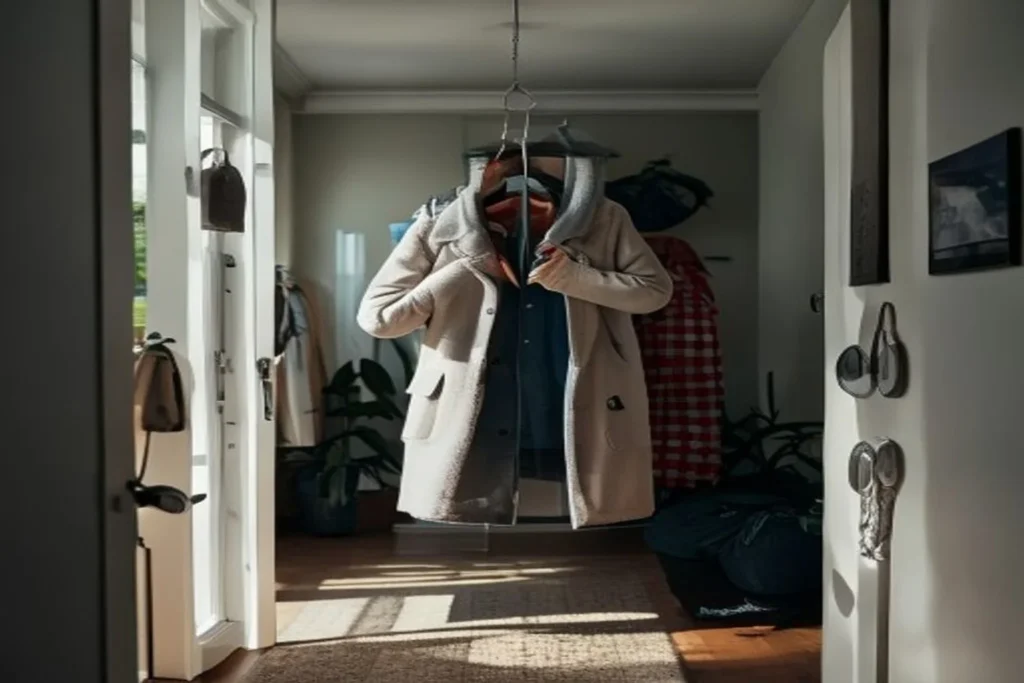
Everything that comes through the front door either gets handled or turns into clutter. Hang the coat, put the bag in its spot, keys on the hook, shoes off and put away. Mail gets a decision on the spot: act on it, file it, or recycle it.
The entryway stays clear because each item gets handled the moment it arrives. The mistake that undoes this is using a chair or the couch as a landing zone “just for a second”: it’s easier to drop a coat there than to open a closet, and that chair becomes the clutter.
The kitchen
A dish goes straight into the dishwasher, not the sink. Wipe the counter after cooking. Packaging goes into the recycling. Leftovers go into a container and into the fridge.
The kitchen stays functional when every use ends with that two-minute reset. The trap is leaving “just one dish” in the sink: once the sink looks like an acceptable holding spot, every dish after that follows the first one.
The bedroom
Clothes go into the closet or the hamper, not onto the floor or the chair. The charger goes back where it lives. The nightstand gets cleared of anything that doesn’t belong on it.
The most common source of bedroom clutter is a specific chair: the one that collects clothes worn for an hour and not dirty enough for the hamper. Remove that chair, or give it another job, and the pile stops forming.
Making it automatic
The two-minute rule doesn’t run on motivation. It works through repetition until the behavior stops requiring a decision. Expect three to four weeks of conscious effort before it starts happening without thinking, and don’t give up in week one just because it still takes effort.
Postponing tasks to handle “in a batch later” rarely works: the batch almost never happens on schedule. For the first two weeks, a sticky note at the entry that reads “2 min?” helps, because it interrupts autopilot at the exact moment the decision gets made. Take it down once you stop needing it.
Two-minute rule, answered
What if I genuinely don’t have two minutes?
You do. Hanging a coat takes about fifteen seconds. Two minutes is the outer limit, not the average. The rule is about acting immediately, not about how long the task takes.
What about tasks that take longer than two minutes?
Those get scheduled instead. The two-minute rule handles small, recurring maintenance. Bigger jobs, like assembling furniture or organizing a closet, are separate projects with their own time.
Does this work for everyone at the same pace?
No, and that’s fine. Some people build the habit in two weeks, others in two months. The principle itself, dealing with small tasks immediately, works regardless of how long it takes to become automatic for you.
What’s the difference between this and the touch-it-once rule?
They complement each other. Touch-it-once means handling something to completion the first time you pick it up. The two-minute rule means that if completion takes under two minutes, you do it immediately instead of scheduling it. Together they cover most routine clutter.
What if my apartment doesn’t have a place to put things immediately?
Then the rule just revealed a missing piece of infrastructure. If you can’t hang the coat because there’s no hook, installing that hook is the actual two-minute project. The rule tells you what’s missing.
Your checklist
- Entry zone has a home for coat, keys, bag, and shoes
- Dishes go directly to the dishwasher, not the sink
- Bedroom chair eliminated or repurposed
- Mail handled at entry: act, file, or recycle, never “later”
Why this holds up over time
The two-minute rule targets the real source of most apartment clutter: not too much stuff, but too many small tasks left undone. Apply it at the entry, in the kitchen, and in the bedroom, and after a few weeks the apartment stays clear even during a busy week, because the mess never gets the chance to build up in the first place.