The One-Touch Rule: How to Stop Letting Mail and Mess Pile Up
In this article
Mail comes in. It lands on the entry console. Three days later you have a paper avalanche. Same thing with jackets, shoes, water bottles, that one Amazon return you keep forgetting to drop off.
The problem isn’t the stuff. The problem is touching it twice. The one-touch rule fixes that.
Key idea: Every time you touch an object, you decide where it goes. Skip the “I’ll deal with it later” pile by deciding once.
What the one-touch rule actually means
The rule is simple: from the moment something enters your space, you handle it once and put it where it lives. No intermediate piles. No “I’ll sort this later.” No console-table purgatory.
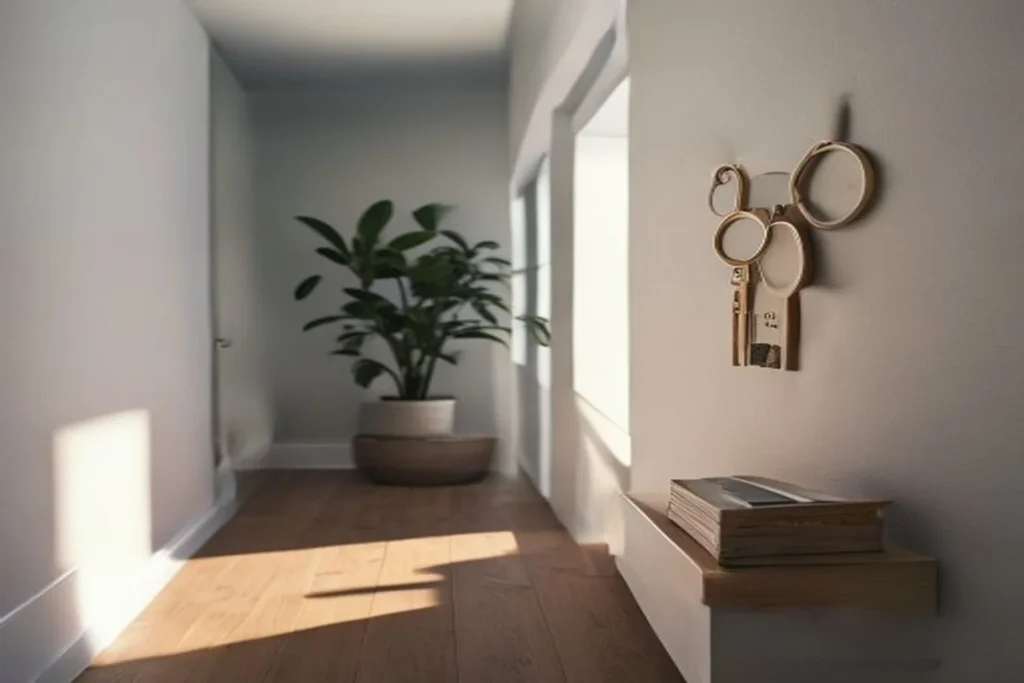
That sounds rigid until you realize you already do it for some things automatically. Keys go on the hook. Your phone goes on the charger. The hard part is extending that reflex to the stuff you currently postpone: mail, packages, jackets, bags, paperwork.
The one-touch rule works because it kills the pile before it forms. Piles exist because you touched something, decided “not now,” and put it down. Removing that middle step removes the pile.
How to build the three homes by the entry
You need three permanent destinations within ten steps of your door. Without these, the rule has nowhere to send things. Stick to three: each extra zone is one more decision at the door, and decisions are exactly what the rule is trying to remove.
1) The exit zone (things leaving the apartment)
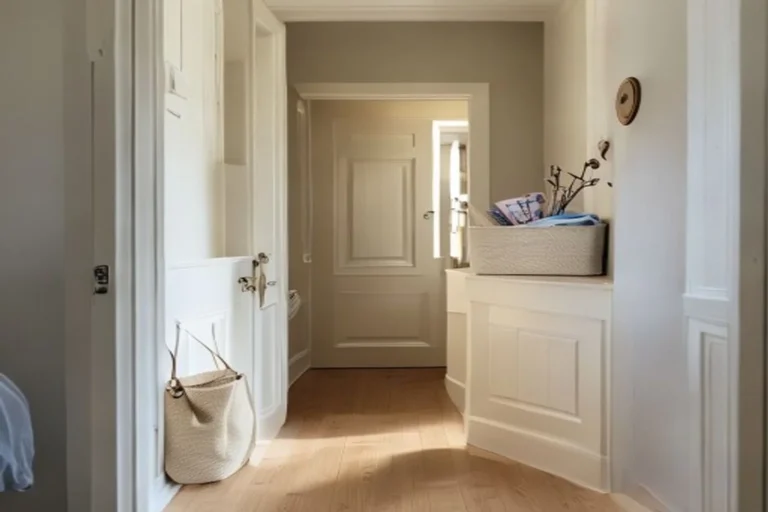
Returns, library books, dry cleaning, packages to mail: anything with a next move that isn’t your living room floor. A small basket, a hook, or a designated chair near the door works. Whatever lands here leaves with you next time you go out. Put it on the coffee table instead and it migrates, then multiplies.
2) The action zone (things that need a response)
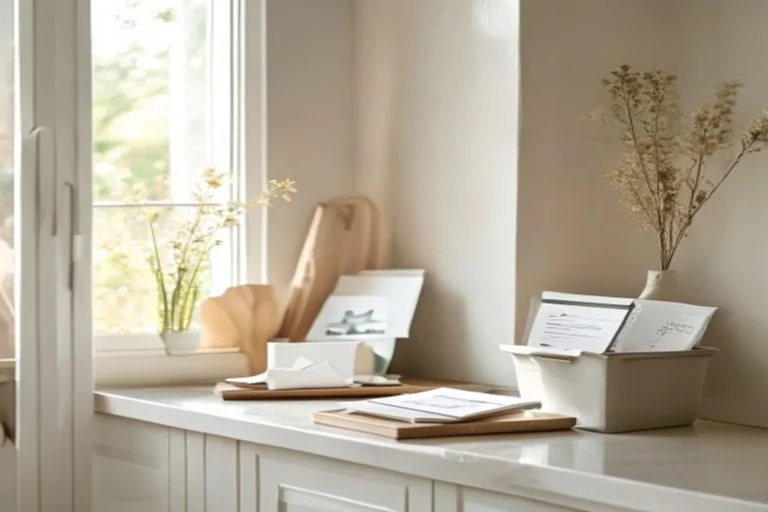
Mail that needs a reply, forms to sign, bills: anything that needs your decision but not right now. A single tray, file, or open-top box holds it, and it stays capped at one container. The size of the container is the rule. Once it’s full, you sit down and clear it instead of letting it overflow onto the counter.
3) The trash and recycling zone (things that go nowhere)
Most of what enters your home is junk mail, packaging, receipts. Open mail standing up next to the bin and toss the bulk of it right there; only what needs action goes to the action tray. Walking junk mail to the kitchen “to throw out later” is how it ends up on the counter instead. Put a small waste basket directly under the entry console, even if it’s the ugliest bin you own: the closer it sits to your hand, the more reliably things actually get thrown out instead of stacked.
The 60-second entry routine that locks it in
- Door opens. You walk in carrying things.
- Keys on the hook. Phone wherever phones live for you.
- Mail in hand: stand at the recycling bin. Toss junk immediately. Anything that needs action goes in the action tray. Anything to send out goes in the exit zone.
- Packages: open at the door, recycle the box, decide where the item lives.
- Jacket on hook, shoes in their spot, bag in its spot.
- Walk into the rest of your apartment with empty hands.
About a minute, start to finish. No surfaces touched that didn’t need to be touched. No pile forming.
One-touch questions
What’s the best way to stop mail from piling up?
Process it at the door, standing up, next to the recycling. Don’t let it travel into the living space. Open, decide, file or trash, no exceptions.
How often should you clear the action tray?
Weekly. Pick a fixed day (Sunday afternoon works for most people). The constraint is that the tray must close or you’re behind.
What happens if you let piles form anyway?
Decision fatigue compounds. Each pile becomes a “future-you problem” that grows scarier the longer you avoid it. The one-touch rule keeps each decision tiny and immediate.
Does the one-touch rule work for emails too?
Yes. Same principle: open an email, decide once (reply, archive, delete, snooze with a task). Don’t let “I’ll think about it later” become inbox sprawl.
What if I’m tired when I come in?
The system is designed for tired-you. A routine this short is easy to push through even on a bad day. The version of you that’s tired tomorrow will thank present-you.
How long does it take to become a habit?
A few weeks of consistent practice. It takes conscious effort at first and gets easier fast once the three zones are in place.
What about shared apartments?
Start with your own stuff and your own zones. Don’t try to convert roommates. Once your half of the system runs, the contrast often does the selling for you.
Your checklist
- Three zones set up within ten steps of the door
- Recycling bin or bag near the entry
- Hook for keys, charger for phone
- Single tray for action items (capped, won’t overflow)
- A fixed weekly day to clear the action tray
Touch it once
The one-touch rule isn’t about discipline. It’s about removing the option to postpone. Once the three zones exist and the recycling is within reach, the rule runs itself.
Set it up before you next walk in with mail. The first few days take conscious effort; after that it runs on its own.