The Donation Bag Method: How to Declutter Without Overthinking
You want to declutter. But every item you pick up becomes a decision: keep it? donate it? trash it?
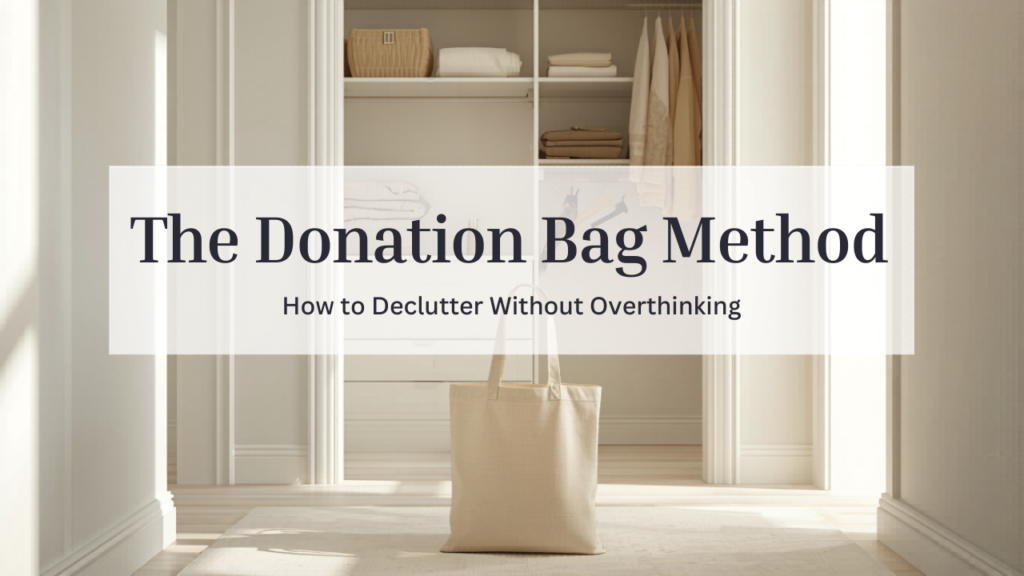
The donation bag method removes the decision. You don’t decide to declutter, you just add to the bag whenever something is obvious.
> 💡 **Key idea:** Keep a permanent, visible donation bag in your apartment. Every time something becomes clearly unneeded, it goes in the bag, no declutter session required.
## Quick summary (for busy people)
– ✔️ A visible bag near the door or closet becomes a passive declutter system
– ✔️ You add to it in real-time, not in declutter sessions
– ✔️ When the bag is full, it leaves: no sorting, no second-guessing
– ✔️ This method handles 80% of declutter without a single planned session
## Why declutter sessions don’t work long-term
Setting aside a Saturday to “go through everything” sounds productive. But it’s exhausting, it rarely gets finished, and it doesn’t prevent the next accumulation.
The donation bag method is different. It’s not a session, it’s a permanent system.
## How the method works
### 1) Set up the permanent bag
– **Why it works:** A physical, visible bag creates a destination for unwanted items in real-time, without a decision required in the moment
– **How to do it:** Put a reusable shopping bag or a small laundry bag inside your closet door or just inside your apartment entrance. It needs to be visible, not in a cabinet, not under the bed
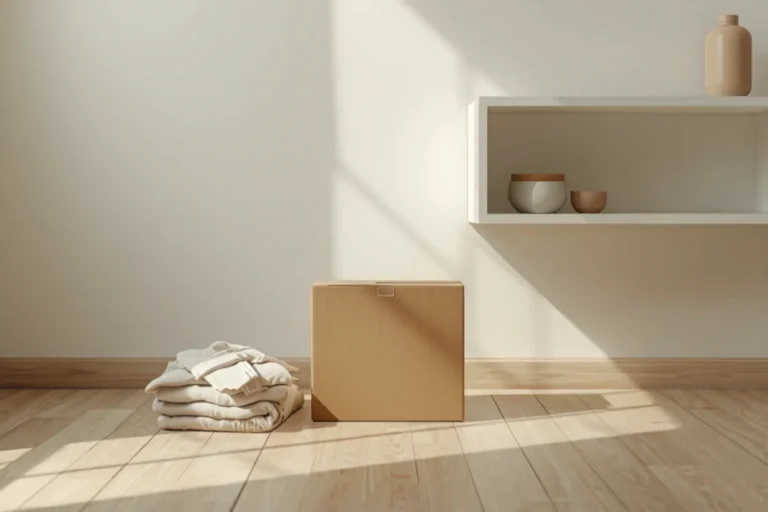
– **Common mistake:** Using a cardboard box. Boxes become “storage” mentally. A bag signals donation. Use a bag
### 2) Add items in the moment, not in sessions
– **Why it works:** The best declutter decisions happen in daily life, not during forced sessions. You grab a shirt and realize you haven’t worn it in a year. That’s the moment to drop it in the bag
– **How to do it:** When you notice you don’t want something (while getting dressed, unpacking groceries, cleaning) drop it in the bag right then. Don’t set it aside to “decide later”
– **Common mistake:** “I’ll put it in the bag later.” Later means never. If it’s obvious in the moment, act in the moment
### 3) Never second-guess what’s already in the bag
– **Why it works:** Second-guessing is how bags become storage containers. Once something is in, it’s gone
– **How to do it:** Make a personal rule: once something goes in, it doesn’t come back out. If you’re not sure about an item, don’t put it in yet. But once it’s in, it stays in
– **Common mistake:** Going back to retrieve items “just in case.” If you’re doing this, the bag isn’t working as a system, it’s become a holding zone
### 4) Drop the bag when it’s full: same day
– **Why it works:** The longer a full bag sits, the higher the chance of items coming back out or the bag becoming furniture
– **How to do it:** When the bag is full, it goes out that day. Drop it at a donation bin, schedule a pickup, or leave it outside a thrift store. Don’t let full bags sit more than 24 hours
– **Common mistake:** Keeping the full bag around “because I might need something.” You won’t. If you haven’t touched it in a week, you don’t need it
### 5) Start a new bag immediately
– **Why it works:** The system only works if there’s always an empty bag ready. No bag = no destination = items accumulate again
– **How to do it:** The moment you drop off a full bag, put a new empty bag in its spot before you close the closet
– **Common mistake:** Waiting until you feel like decluttering again. The bag is always there, that’s the point
## Quick answers
### What’s the best way to declutter a small apartment without overwhelm?
The donation bag method. Keep a visible bag, add items in the moment whenever something is clearly unneeded, and drop the bag when it’s full. No sessions required.
### How often should you donate?
Whenever the bag is full. For most apartments, that’s every 2-6 weeks. Don’t schedule it, just drop when full.
### What happens if you stop using the bag?
Clutter accumulates passively and you’re back to the “Saturday declutter” problem. The bag needs to be always out, always visible.
## Practical checklist
– [ ] Reusable bag placed in visible location (closet door or near entrance)
– [ ] Rule established: items added in the moment, not in sessions
– [ ] Rule established: nothing comes back out once it’s in
– [ ] Full bags dropped same day they fill
– [ ] New empty bag placed immediately after dropping the full one
## Common mistakes
1. Using a box instead of a bag. Boxes become storage
2. Retrieving items after they’re in. Once in, it’s gone
3. Letting a full bag sit. Full bag leaves within 24 hours, always
## Pro tip
Tell yourself the bag is for someone who needs the item more than you do. That reframe makes dropping items easier and makes retrieval feel wrong rather than sensible.
## Conclusion
No scheduled sessions. No decision fatigue. Just a bag that’s always there and gets filled passively in the moments when decisions are clearest. It’s not a habit, it’s a system. And systems work even when habits don’t.
Related reading
- The Touch-It-Once Rule: Stop Apartment Clutter Before It Forms
- The One In, One Out Rule
- 5 No-Clutter Systems That Actually Work
## FAQ
### What if I feel guilty donating gifts?
That guilt is normal, but keeping an item you don’t use doesn’t honor the giver. Using the bag rule consistently means the decision was made by the system, not by you in an emotional moment.
### Can I sell items instead of donating?
Yes. If something is worth selling, set it aside in a separate “sell” zone. But only if you commit to listing it within 48 hours. If you don’t list it in 48 hours, it goes in the donation bag.
### What about sentimental items?
Don’t put sentimental items in the bag unless you’re 100% sure. The method works best for obvious decisions: clothes you don’t wear, kitchen tools you never use, duplicates. Sentimental items get their own separate process.