Entryway Organization for Small Apartments: 5 Setups That Actually Work
In this article
The entryway is the first thing you see when you get home. And in most small apartments, it’s also a dumping zone for shoes, bags, keys, and everything that came in from the outside.
Five setups, all renter-safe, all under $50.
A functional entryway needs three things: a landing zone for what comes in daily (keys, bag, mail), a shoe solution, and a hook for outerwear. Everything else is optional.
Quick summary (for busy people)
- The floating shelf + hook combo is the most space-efficient setup for small entries
- Shoe storage belongs near the door, not in the closet where you’ll never use it
- One wall hook per person in the household, plus one spare
- A small tray on any surface instantly contains daily drop items
Why entryways become chaos zones
No system. When something comes in, it lands wherever there’s space. Keys on the counter. Shoes in the middle of the walkway. Bags on the floor.
The fix isn’t discipline, it’s giving every category a home right at the door.
5 entryway setups that work in small apartments
Setup 1: The floating shelf + hooks (wall-mounted, no furniture)
Best for: apartments with no entryway space at all, just a door opening into a hallway or room.
- Mount a floating shelf at chest height near the door (Command adhesive strips for renters, no drilling)
- Hang 3-4 Command hooks below the shelf for bags and coats
- Place a small tray on the shelf for keys, mail, and daily items
- Add a narrow shoe rack on the floor below
Total footprint: 0 square feet of floor space used.
Setup 2: The bench with storage
Best for: apartments with a small entry alcove or foyer.
- A small storage bench (IKEA Hemnes or similar, under $80) provides seating and shoe storage inside
- Add a mirror on the wall above for the “get ready to leave” use case
- Hooks on the wall beside the mirror for coats and bags
Total footprint: about 2 sq ft.
Setup 3: The over-door hook system
Best for: renters who can’t touch the walls at all.
- An over-door hook rack on the back of the front door holds coats, bags, and umbrellas
- A small wall tray or Command-mounted key hook beside the door handles daily drop items
- Shoes go in a stackable rack just inside the door
Zero wall damage, zero floor furniture.
Setup 4: The console table zone
Best for: apartments with a proper entry hall.
- A narrow console table (12-14 inches deep) against the wall
- Baskets underneath for shoes
- Tray on top for keys, mail, and daily items
- Mirror above, hooks on the sides or wall beside it
Creates the most organized and complete entry without much space.
Setup 5: The minimal drop zone
Best for: tiny apartments where even a console table is too much.
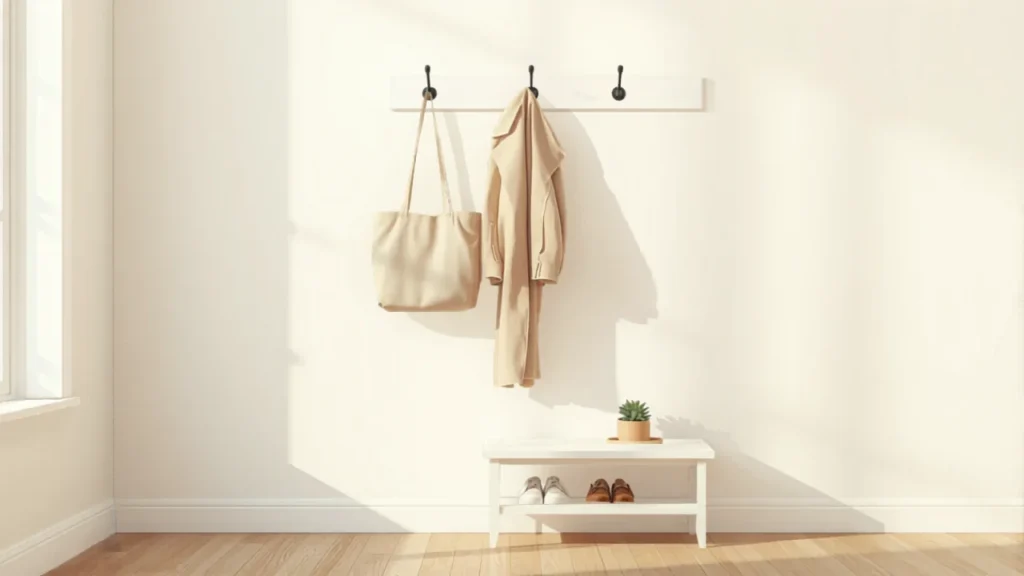
- One Command hook at shoulder height for the daily bag
- One small hook for keys, mounted right beside it
- Shoes lined up against the wall in a pair-per-person system (no rack)
- That’s it: no furniture, no trays, no mirrors
The minimum viable entryway. Works in any space.
Quick answers
What’s the best entryway organization for a small apartment?
A floating shelf with hooks below and a tray on top. It keeps bags, coats, keys, and mail off the floor and out of the room, all within a zero floor-footprint setup.
How often should you reset the entryway?
Daily, as part of your evening reset. Takes 60 seconds. Mail sorted, shoes in place, bag hung. If you leave it for a week, it becomes a project.
What happens if you don’t organize the entryway?
Shoes spread across the floor, bags land everywhere, and you spend time every morning finding keys and looking for things. The entryway controls how every day starts.
Practical checklist
- Landing zone defined (tray, shelf, or hook for daily drop items)
- Shoe solution in place near the door
- Hooks installed or hung for coats and bags (one per person + one spare)
- Mail/key system in place
- Floor clear: nothing sitting on the floor without a designated spot
Common mistakes
- Shoe storage in the bedroom closet. Shoes need to be where you take them off
- Too many items in the tray. Tray holds keys + wallet + one item max. Overflow moves daily
- No dedicated hook for the daily bag. Without a hook, the bag lands on the floor, every time
Pro tip
Label the tray or hook with “TODAY” and set a rule: only today’s items stay here. Yesterday’s mail and last week’s receipts move out daily. It takes 30 seconds and keeps the landing zone functional.
Conclusion
Three elements: landing zone, shoe solution, hooks. Any one of the five setups here covers all three. Pick the one that fits your space and install it this week. The entryway determines the tone of every arrival and departure. It’s worth the 20 minutes.
Keep reading
- Small Bedroom Setup: 6 Layout Moves That Create Space
- Small Living Room Setup: 5 Layout Moves
- How to Organize a Small Closet With No Extra Furniture
FAQ
Can I mount hooks without drilling in a rental?
Yes. 3M Command hooks hold 5-7.5 lbs each depending on the type. For coats and bags, use the large Command hook strips rated for 7.5 lbs. Remove cleanly with the slow straight pull.
What’s the best shoe rack for a small entryway?
Stackable clear shoe boxes let you see what’s inside and keep shoes separated. For quick-access everyday shoes, a simple 2-tier metal rack at floor level works well and stays under $25.
How many hooks do I actually need?
One per person in the household plus one spare for guests. More than that and every hook ends up with three things on it, which defeats the purpose.