The Three-Box Method: How to Make Decluttering Actually Happen This Weekend
In this article
Decluttering sounds simple but rarely is. Most attempts stall because deciding what to keep takes mental effort, and you run out of energy halfway through. The Three-Box Method removes most of that decision fatigue: instead of weighing every option, you pick between three boxes, keep, donate or trash, and move on. That limit is what makes a full weekend of progress possible.
The setup
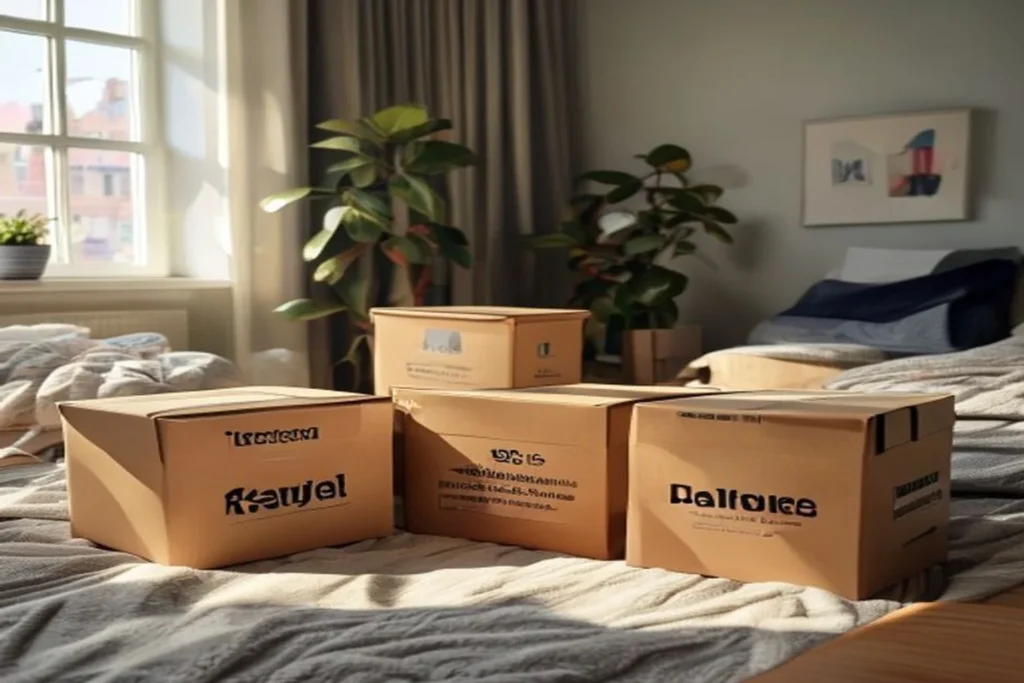
Get three boxes or bags. Label them clearly: KEEP, DONATE, TRASH. The labels matter, because you’ll be making rapid decisions and clear labels stop you from second-guessing which box is which.
Choose one space to tackle: a closet, a drawer, a single shelf, a corner. Don’t try to do the whole apartment at once. The method works because of focus, and trying to cover too much breaks that focus fast.
The actual process
1) Take everything out
Empty the area completely before you sort anything. Drawer onto the bed, closet onto the floor, shelf wiped bare. Items sitting in their usual spot are easy to wave off with “I might need this someday”. Once they’re pulled out, they have to earn their place back. Sorting through things while they’re still sitting where they live is the fastest way to end up keeping everything.
2) Touch each item once
Pick up an item and decide within five seconds: KEEP if you use it regularly, DONATE if it’s in good shape but you don’t need it, TRASH if it’s broken, expired or ruined. Drop it in the box and move to the next one. The method only works at speed: picking the same item up two or three times just gives you more chances to talk yourself into keeping it.
3) Resist the “maybe” pile
A “maybe” pile is where decluttering stalls, because every item you set aside today is one you’ll have to face again later. If you can’t decide between keep and donate in five seconds, ask one question: have you used this in the last six months? No, it goes to donate. Yes, it stays. Don’t let yourself add a fourth pile, it quietly cancels out the whole method.
4) Put keep items back with intention
With the space empty, put keep items back one at a time instead of dumping them in as a group. Give what you actually reach for the easiest spots, and push what you rarely use to the back or the top shelf. Putting everything back exactly where it was skips the one chance you get to fix how the space is organized.
5) Remove donate and trash the same day
Boxes left sitting for a week have a way of creeping back into the apartment, one “actually, let me keep this” at a time. Drive the donation box to a donation center or schedule a pickup, and take the trash out with the building’s collection, the same day you fill the boxes. “I’ll take it next week” is usually how it never happens.
Three-box questions
What if I’m too sentimental to declutter?
Start with categories where you have less emotional attachment: kitchen tools, office supplies, cleaning products. Build the habit on easy items before tackling photos or memorabilia.
How long should I spend per session?
One to three hours per session, at most. Push past that and fatigue makes your decisions worse. A few short sessions across a weekend beat one marathon session.
What about valuable items I want to sell?
Add a fourth box: SELL. But set a rule with it: if you haven’t actually sold the items within 30 days, they move to donate. For most people, selling just becomes a way to delay the decision.
What if I find things I forgot I had?
That happens constantly during decluttering. Apply the same five-second rule. Forgetting you owned something is a strong sign you don’t need it. Donate it unless there’s a clear reason to keep it.
How do I deal with items that “have potential” but I never use?
Potential isn’t use. Craft supplies bought for a project you never started, exercise equipment gathering dust, the gadget that “could be useful someday”: all of it counts as donate. Potential that never gets used just takes up space.
What works best with this method
- Clothing (the easiest category to apply this to)
- Kitchen tools and utensils
- Bathroom products and toiletries
- Office supplies
- Books (warning: emotional category for many)
- Children’s toys
- Random drawers (junk drawer, etc.)
The rhythm kicks in after item ten
The first five to ten items are the hardest, because your brain hasn’t adjusted to deciding this fast yet. Push through that stretch. By item twenty the rhythm sets in, and by the end of a session you’re waving off things in two seconds that would have taken you five minutes at the start.
Pick one area this weekend and run the three boxes through it. Do another area next weekend. Keep going and an apartment that took years to fill can look different within a month.