How to Cover Ugly Rental Flooring Without Losing Your Deposit
In this article
You signed the lease, walked in, and there it was: scuffed laminate, cracked tile, or carpet the color of old coffee. You can’t rip it out. You can’t refinish it. But you also can’t relax in a space that looks worn out before you even unpack. The good news is you can cover ugly rental flooring without losing your deposit, and you don’t need permission from your landlord to do most of it.
The floor is the biggest surface in any room, so when it looks bad, everything on top of it looks bad too. Here’s how to fix that the renter-safe way, so you get your money back when you move out.
Key idea: You can hide bad rental floors with temporary, removable layers that protect the surface underneath instead of damaging it.
Skim this
- Cover, don’t change. Use rugs, peel-and-stick tiles, or roll-out vinyl that lifts off cleanly later.
- Never use permanent adhesive directly on the original floor. That’s how deposits disappear.
- Photograph the floor before and after so you have proof of its starting condition.
- Start with the rooms you actually live in. Living room and bedroom first, closets last.
How to cover ugly rental flooring without damage
The whole strategy comes down to one rule: add a layer, never alter the layer that’s already there. Your lease protects the original floor, not whatever you put on top of it. So every method below sits over the existing surface and comes up when you leave.
That means avoiding anything that bonds permanently. Real glue, nail-down planks, and staples are out. Peel-and-stick products that bond to themselves, area rugs, and floating floors are in. The trick is matching the method to the floor you’re hiding. A cracked bathroom tile needs a different fix than a stained bedroom carpet, and a scuffed kitchen vinyl needs something you can wipe clean.
The best ways to cover rental flooring
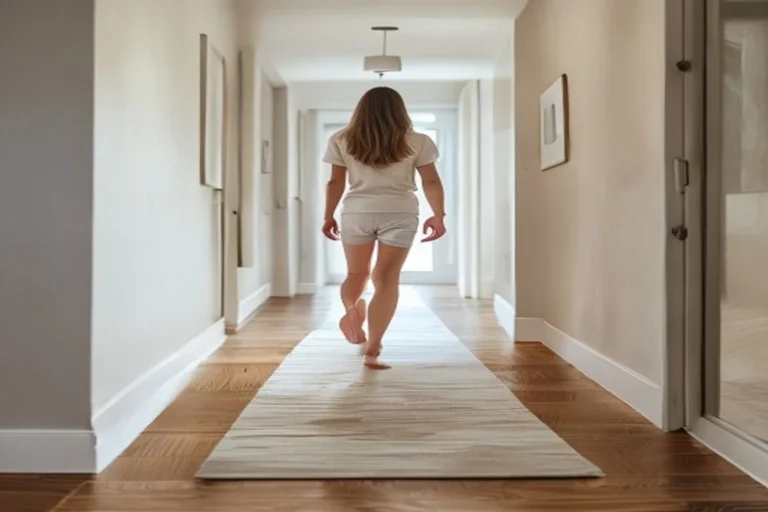
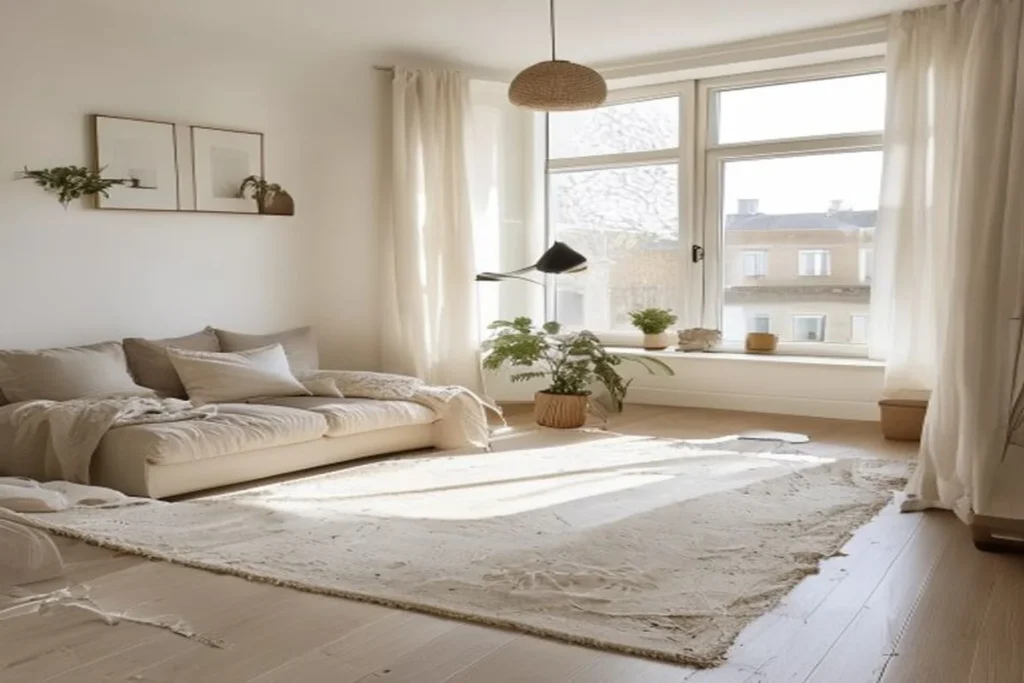
1) Large area rugs
Why it works: A rug is the fastest, cheapest, and most renter-proof fix there is. It covers a huge amount of floor in seconds and leaves zero trace.
How to do it: Buy the biggest rug your budget allows, then add a non-slip pad underneath so it stays put and doesn’t bunch. Size it so your furniture’s front legs sit on the rug. A too-small rug makes the room look smaller, not better.
Common mistake: Choosing a rug that floats in the middle of the room like a postage stamp. Go big. The rug should anchor the seating area, not hide in it.
2) Peel-and-stick floor tiles
Why it works: These mimic wood, stone, or patterned tile and stick to themselves or to a backing, so the original floor stays untouched. They’re great for kitchens and bathrooms where rugs don’t make sense.
How to do it: Lay a sheet of removable adhesive paper or a thin underlayment first, then stick the tiles to that, not to the floor. Clean and dry the surface, measure your starting point, and work from the center out so the edges stay even.
Common mistake: Sticking tiles straight onto worn vinyl or porous concrete. The adhesive can grab too hard and pull up the finish when you remove it. Always put a barrier layer between.
3) Click-together floating floor
Why it works: Floating vinyl plank locks edge to edge into one sheet that rests on top of the old floor by its own weight. Nothing attaches to the subfloor, so it lifts out in one piece when you move.
How to do it: Lay a thin foam underlayment over the existing floor, then click the planks together across the room. Leave a small gap at the walls so the floor can shift with temperature. Most planks cut with a utility knife, no saw needed.
Common mistake: Skipping the underlayment. Without it the planks slide, click apart, and you hear every footstep. The foam keeps them stable and quiet.
4) Outdoor or indoor-outdoor carpet tiles
Why it works: Carpet tiles come in squares that you arrange without glue, and you can pull up a single stained one instead of replacing the whole thing. Good for cold floors and rooms where you want softness.
How to do it: Dry-lay them tight against each other starting from one corner. Many have a grippy backing that holds without adhesive. For a high-traffic spot, a few removable carpet dots keep them from creeping.
Common mistake: Buying tiles with permanent peel-off adhesive backing. That residue is a nightmare to clean off a rental floor. Stick to friction-fit or removable styles.
5) Roll-out vinyl flooring
Why it works: Sheet vinyl rolls out like a giant mat and covers an entire small room at once. It’s waterproof, wipes clean, and you can lay it loose so it never bonds to the floor.
How to do it: Measure the room, cut the sheet a touch oversized, then trim it to fit snug against the walls. Let it sit loose and let the furniture hold it down. For a kitchen, a bead of removable double-sided tape at the doorway keeps the edge flat.
Common mistake: Gluing the whole sheet down for a smoother look. You’ll spend your last week scraping it up and probably eat into your deposit. Loose-lay is plenty stable for a rental.
Rental flooring questions
Can I put new flooring over carpet in a rental?
Yes, with the right product. Floating vinyl planks and large rugs both work over low-pile carpet. Avoid anything you glue down, and add a firm underlayment so the new layer doesn’t sink or shift.
Will peel-and-stick tiles ruin my deposit?
Only if you stick them directly to the original floor. Put a removable barrier layer underneath first, and the tiles come up clean with no residue, which keeps your deposit safe.
What’s the cheapest way to cover an ugly floor?
A large area rug with a non-slip pad. It’s the lowest cost per square foot, takes minutes to install, and leaves no trace at all when you move out.
Do I need my landlord’s approval to cover the floor?
Usually not, since you’re not altering the original surface. A rug or floating floor counts as your own furnishing. Check your lease for anything unusual, but removable covers are almost always fine.
How do I remove peel-and-stick tiles without leaving marks?
Warm them gently with a hair dryer to soften the adhesive, then lift slowly from one corner. If you used a barrier layer underneath, the tiles peel up with the layer and the original floor stays clean.
Can I cover bathroom tile that’s cracked or stained?
Yes. Waterproof peel-and-stick vinyl or loose-lay sheet vinyl both work over old tile. Seal the doorway edge with removable tape to keep water out, and dry the area fully before you start.
Practical checklist
- Photograph the existing floor in good light before you cover anything.
- Clean and fully dry the surface so dust doesn’t get trapped underneath.
- Choose a method that lifts off cleanly: rug, floating floor, or barrier-layer tiles.
- Keep all leftover product and the receipt in case you need to patch later.
Where people go wrong
- Using permanent glue or nails on the original floor, which guarantees a deposit deduction.
- Buying a rug or sheet that’s too small, so the floor still looks patchy and cheap.
- Skipping the before photos, leaving you with no proof the damage was already there.
A trick worth knowing
Before you cover anything, email your landlord a short note with photos of the existing floor and a line saying you’re adding a removable cover over it. You’re not asking permission for a rug, but having a dated record of the floor’s original condition protects you better than any product can. If a dispute comes up later, that email settles it.
Cover it, do not change it
Ugly rental flooring is annoying, but it’s not permanent and it’s not your problem to fix for good. Pick the method that matches your room, keep every layer removable, and document the floor before you start. Your next step: measure your worst room this week and order one large rug or a box of floating planks. One layer, and the space already looks like yours.