How to Turn a Tiny Bedroom Into a Functional Space (Renter-Proof)
In this article
A small bedroom should do two things well: help you sleep and help you start the day. Most small bedrooms fail at both because every square inch is overstuffed and nothing has a clear purpose.
You don’t need more space. You need a layout that works with how a small bedroom actually functions. These moves are renter-safe, low-cost, and make a real difference in how the room feels.
💡 Key idea: A functional small bedroom is designed around movement first, storage second, aesthetics last.
The gist
- ✔️ Bed placement controls the whole room: get it right first
- ✔️ A floating nightstand frees 4 square feet of floor space
- ✔️ Vertical storage above 5 feet is almost always unused
- ✔️ Blackout curtains hung from ceiling height make the room feel taller
Why small bedrooms feel cramped even when they’re not full
A small bedroom feels cramped when the furniture placement blocks natural movement paths. If you have to turn sideways to get from the door to the bed, the room feels smaller than it is, regardless of its actual size.
Clear paths, vertical storage, and a single light source at eye level fix the feeling almost immediately. These are layout and lighting changes, not purchases.
How to turn a tiny bedroom into a functional space
1) Place the bed against the longest wall, not the opposite wall
- Why it works: Beds placed against the longest wall open a clear path from the door to the rest of the room. This single change makes the room feel 20% larger without touching anything else.
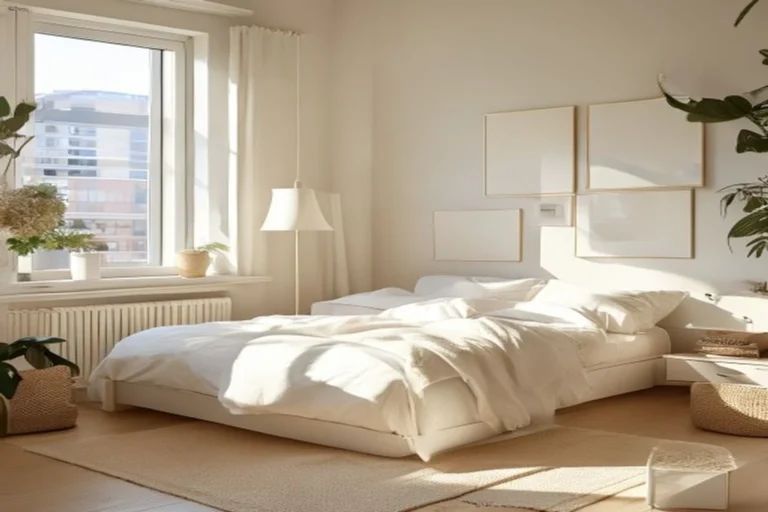
- How to do it: Identify your longest wall. Push the bed flat against it. Leave at least 24 inches on the accessible side. If you have a window on that wall, the bed can go under it safely in most rentals.
- Common mistake: Centering the bed on the main wall because it looks symmetrical. Symmetry in a small bedroom wastes the most valuable floor space on both sides.
2) Switch to a floating nightstand
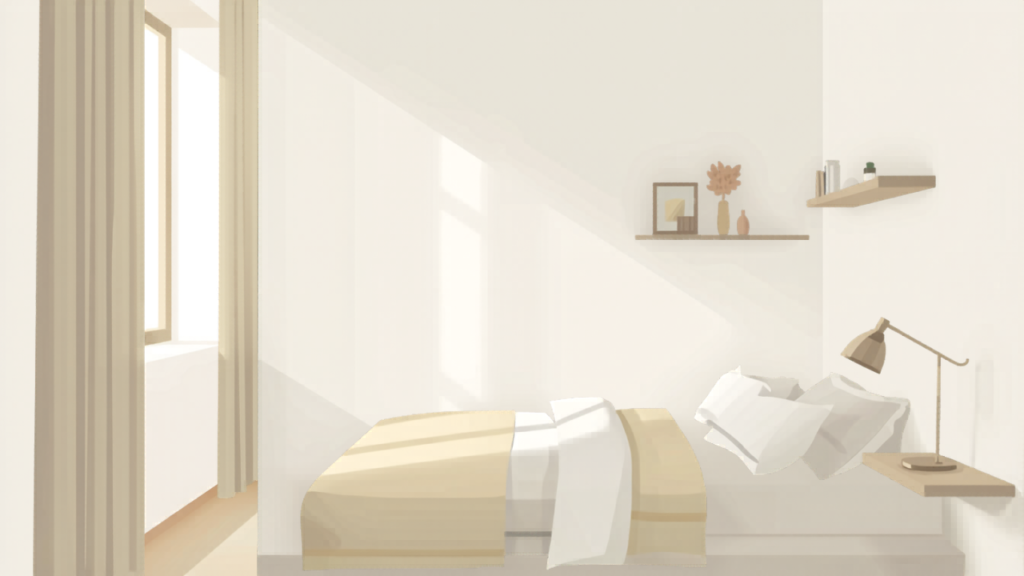
- Why it works: A standard bedside table takes 4 square feet of floor space. A floating wall shelf takes zero floor space and holds the same items.
- How to do it: Install a floating shelf at mattress height on the accessible side of the bed. Width of 12 to 16 inches is enough for a lamp, phone, and water glass. Command shelf strips work for light loads in rentals.
- Common mistake: Keeping the floor table because it has a drawer. A drawer you never open is not worth 4 square feet of floor.
3) Use vertical wall space above 5 feet
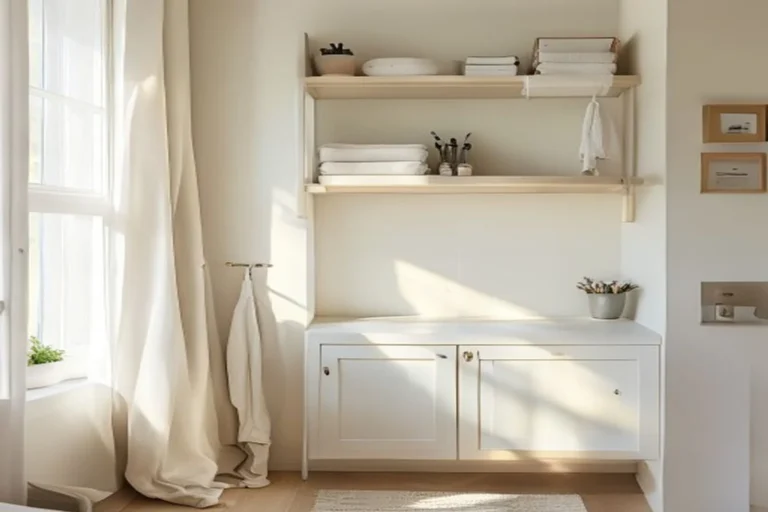
- Why it works: Small bedrooms almost always have unused space above shoulder height. Floating shelves from 5 feet to ceiling height can hold books, folded items, and storage boxes without consuming any floor area.
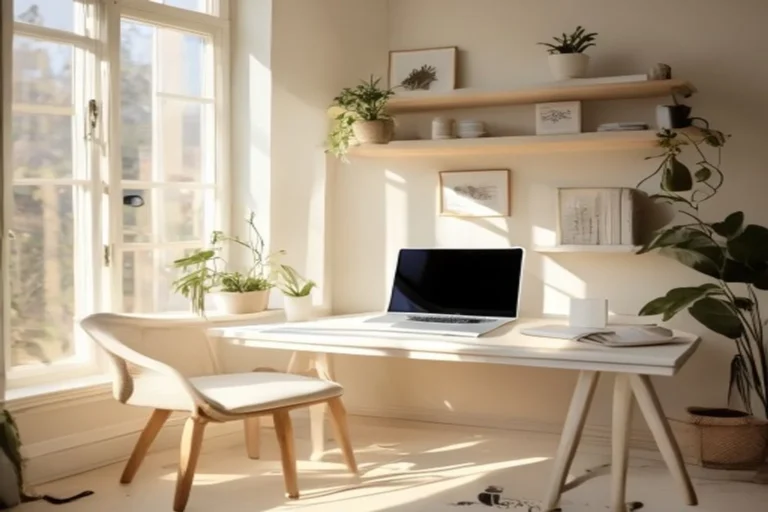
- How to do it: Install two or three floating shelves above your dresser or desk, starting at 5 feet and going up. Label storage boxes on the high shelves for seasonal or rarely needed items.
- Common mistake: Putting decor on high shelves. Eye-level decor makes walls feel busy. High shelves are for utility storage only in small spaces.
4) Hang curtains from ceiling height, not window height
- Why it works: Curtains hung from ceiling height draw the eye upward and make the ceiling appear higher than it is. The room looks taller and more open with no structural change.
- How to do it: Install curtain brackets 2 to 4 inches from the ceiling. Use blackout curtains that extend to the floor. The extra fabric length from ceiling to window is cheap and the visual payoff is immediate.
- Common mistake: Hanging curtains directly above the window frame. This cuts the room visually in half and makes the ceiling feel low.
5) Replace a dresser with under-bed storage
- Why it works: A dresser can occupy 10 to 15 square feet of bedroom floor. Under-bed storage uses space that already exists and opens up the floor for movement.
- How to do it: Measure the clearance under your bed. Buy flat bins on wheels that fit that height. Categorize: one bin for off-season clothes, one for extra linens, one for items that would otherwise be in a dresser.
- Common mistake: Using under-bed storage for miscellaneous items. Labeled categories only. Random storage under the bed becomes a graveyard of forgotten items.
Tiny bedroom questions
What is the best small bedroom setup for renters?
Bed against the longest wall, floating nightstand, vertical shelving above 5 feet, curtains from ceiling height, under-bed storage replacing the dresser. These five moves transform a cramped bedroom without a single renovation.
How often should you reorganize a small bedroom?
A full layout review once a year is enough. Seasonal changes, like swapping summer and winter clothes under the bed, happen naturally. The setup itself should not require frequent changes if it is right from the start.
What happens if you don’t optimize a small bedroom layout?
Movement paths stay blocked, the room feels permanently cramped, and daily friction in the morning and at night accumulates into low-grade stress. Small bedroom layout is directly tied to sleep quality and morning mood.
What if my bedroom only fits one layout option?
Then optimize within that layout. You can still add vertical shelving, ceiling-height curtains, under-bed storage, and a floating nightstand regardless of where the bed sits. Layout is only one of five levers.
Is a loft bed worth it in a small bedroom?
For renters who are comfortable sleeping elevated and do not have high ceilings, a loft bed can free the floor space below for a desk or storage. Minimum ceiling height for a loft bed is 9 feet for adults.
How do I create a calm bedroom without spending money?
Remove three items from surfaces, reposition the bed to the longest wall, and put your phone charger outside the bedroom at night. These three zero-cost moves change the feel of a small bedroom faster than any purchase.
Should a small bedroom have a mirror?
One full-length mirror on the back of the bedroom door or on a narrow wall doubles the visual space and serves a practical function. Avoid multiple mirrors or mirrored furniture, which creates visual confusion in small rooms.
Practical checklist
- [ ] Bed against the longest wall with 24 inches of clearance
- [ ] Floating shelf or wall-mounted nightstand installed
- [ ] At least one floating shelf above 5 feet for storage
- [ ] Curtains hung from ceiling height or as high as possible
What not to do
- Keeping furniture that doesn’t have a job. Every piece in a small bedroom must earn its floor space.
- Using too many small decorative items on every surface. They create visual noise that makes the room feel smaller.
- Blocking the window with the bed or tall furniture. Natural light is the single most powerful tool for making a small bedroom feel spacious.
One thing that helps
Remove the top item from every surface in your bedroom right now. One less thing on the nightstand, one less thing on the dresser. You won’t miss any of them and the room will feel noticeably calmer tonight. Visual minimalism in the bedroom improves sleep quality more than most people realize.
Function before decoration
A functional small bedroom is not about having a bigger apartment. It is about bed placement, floor space, vertical storage, and light. Five moves. All renter-safe. All reversible. All low cost.
Start with the bed. That one change rearranges the whole room’s logic in an afternoon.